If you're serious about the environment, we all know planting trees is one of the best solutions and tree removal should be a last resort which is why we're committed at Pensacola Tree Services to provide the very best for your home as well as the environment. Read more by going here.
A grassroots environmental organization in the Cape Fear River basin of coastal North Carolina wants the United Nations to intervene in a decades-long pollution fight and declare its ongoing PFAS pollution a human rights violation.
In a letter sent to the U.N. Human Rights Commission, Clean Cape Fear alleges that Dupont and its spin-off company Chemours have for decades contaminated their source of drinking water with carcinogenic chemicals. Among other things, the 36-page document, sent Thursday morning, asks that the commission deem the community’s pervasive pollution an infringement of international law.
“We live in one of the richest nations in the world, yet our basic human rights are being violated,” Emily Donovan, co-founder of Clean Cape Fear, said in a statement. “We refuse to be a sacrifice zone. Residents here are sick and dying and we continue to lack equitable access to safe water in our region, or the necessary health studies to truly understand the impact from our chronic PFAS exposures.”
The Cape Fear River provides water for 500,000 people in three counties. For three decades, unbeknownst to residents, the Fayetteville Works chemical plant owned first by Dupont and then by Chemours was slowly contaminating the river and local wells with PFAS chemicals. In 2017, the public, long confused by the commonplace occurrence of very rare illnesses, finally learned who was responsible when a local newspaper broke the story.
Chemours was made to pay a $12 million fine to the state and clean up its mess – but has yet to provide reparative assistance for the damage it caused. Now, the company has asked the state Department of Environmental Quality for a permit to expand its site, which sits 70 miles upstream from Wilmington,, a growing city of more than 117,000 people.
Only in the past few decades have scientists begun to fully understand what PFAS does to the human body. The substances, called “forever chemicals” and used in all kinds of industrial processes, bioaccumulate in the body. That means even a series of small exposures, or exposure through the food chain, such as in contaminated fish, can lead to serious health problems down the line. Research has linked these chemicals to endocrine disruption, multiple forms of cancer, pregnancy complications, and an array of other chronic and dangerous health problems.
Clean Cape Fear claims in its letter to the UN that residents of the Cape Fear area have been exposed to more than 300 distinct PFAS chemicals. The region is home to one of the worst cases of PFAS contamination in the country.
Donovan, by her own admission, became an environmental activist only recently. She was a youth group director at a local church and a devout Christian, mostly concerned with the weekly Bible study she ran. But she began to realize that, during prayer meetings, students discussed the same things over and over.
“I noticed most students were asking heavy prayers,” she said. “For terminal cancer in a parent, or a brother in the hospital for autoimmune issues.”
With seven other community members, she started Clean Cape Fear around a dining room table.
“This is my mission project now,” Donovan said. “This is what motivates me.”
Donovan says the contamination has not only impacted residents’ health, but also put a financial strain on the community, as local water utilities struggle to clean PFAS chemicals. The upgrades required to do so have resulted in sharp rate hikes. In the meantime, residents who buy bottled drinking water are incurring the costs of ensuring their own protection.
Together with the U.C. Berkeley Environmental Law Clinic, Clean Cape Fear is demanding that Chemours and DuPont be held accountable for all water treatment and cleanup costs still to come. They also demand that state authorities deny the expansion permit.
Claudia Polsky is the director of the law clinic. She led the creation of the letter, and hopes it leads to greater public appreciation of the dangers of PFAS. The European Union has already proposed a ban on the use of most PFAS chemicals, but in the U.S. some 200 million Americans live with PFAS in their drinking water. “There’s an underappreciation of the risk,” said Polsky. She added that when doctors in Cape Fear see patients for health problems that might stem from PFAS exposure, many of them don’t know what to test for.
Polsky believes their request to Marcos Orellana, the UN Special Rapporteur on Toxics and Human Rights, marks a milestone in the fight against PFAS. Though the UN has investigated PFAS contamination in other nations, this would be the first in the United States. Should Orellana, who has investigated and reported on a similar case in Veneto, Italy, agree to launch an inquiry, the next step is to alert Chemours, DuPont, the U.S. Environmental Protection Agency, and the state Department of Environmental Equality. Each would be asked to assume responsibility for the pollution and defend their actions. The complaint would be made public.
The communication asserts that the actions of DuPont and Chemours are illegal under international law. “DuPont and Chemours have violated the human right to clean water and a sustainable environment, the right to bodily integrity, the right to life and health, the right to information, and the right to access to justice and an effective remedy,” the document states. “As a signatory to relevant international instruments, the United States is legally obligated to protect these rights.”
Though the U.N. couldn’t force a response, Polsky says the allegation and inquiry would inspire public pressure for regulatory agencies to act. “We’re hoping it would create the conditions for the DEQ to deny the expansion permit,” she said.
But even if the U.S. were to take severe actions on PFAS, Polsky says companies are adept at finding ways to modify the chemical recipes they use in order to continue business as usual.
“It’s the crook one step ahead of the locksmith,” she said.
This story was originally published by Grist with the headline Is PFAS pollution a human rights violation? These activists say yes. on Apr 27, 2023.
If you're serious about the environment, we all know that planting trees is one of the most effective measures, and tree removal should be a last resort. We at Pensacola Tree Services are dedicated to offering the best for your home as well as the environment, therefore we're committed to delivering it by making it as simple as possible. For responsible tree removal visit us here Tree Removal in Pensacola
This story is co-published with the Daily Yonder. Sign up for the Daily Yonder’s weekly newsletter here.
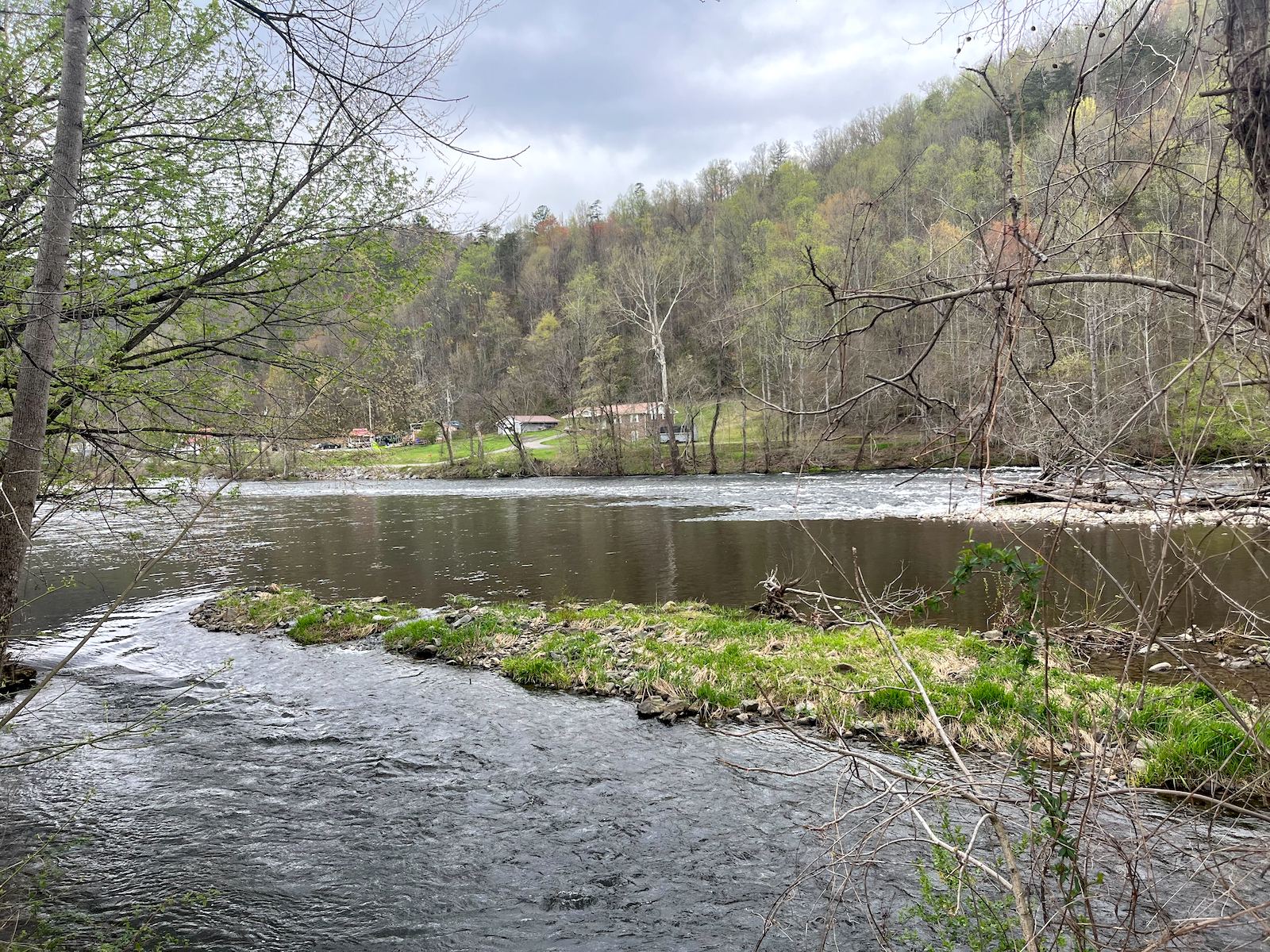
Beyond the forested banks of the Pigeon River, the Smoky Mountains rise from either side of a steep gorge that leads to the town of Hartford, Tennessee. The river runs through the gorge from North Carolina, parallel to Interstate 40, before widening into a series of shallow, shining, and swift ripples and runs. Lining the shores on both sides are about a dozen rafting companies, one right after the other. The guides weren’t very busy on this April day early in the rafting season, so they had taken to the rapids in bright blue boats to enjoy the afternoon. When Jamie Brown was younger, back in the 1980s and ’90s, she never would have dreamed of doing such a thing.
“The smell was horrendous,” she says of the river. “And it was black.”
The Pigeon River flows through Hartford, Tennessee, where it supports several thriving river-rafting businesses. Grist / Katie Myers
Brown is old enough to remember when Hartford was known as “Widowville.” An unusually high number of people have died of cancer here over the years. Once, her father drove her to the headwaters of the Pigeon, where it ran clean and clear, then followed it to the paper mill in Canton, North Carolina, just over the state line from Hartford. He showed her where, below the mill, the river began to turn dark and foul. “My experience was understanding the headwaters, what it could be, and how vile it was, [and] what had been done to our community,” she says.
The paper mill has been a mainstay of Canton since 1908, a thriving part of what was once a burgeoning lumber and paper industry in western North Carolina. Around it sprang up the town. For now, the mill employs 1,100 people in well-paying union jobs, though it once employed more than 2,000. It was called Champion then, for the company that owned it. Champion pulled out in 1999 after a series of environmental lawsuits blamed it for the pollution and economic harm on Tennessee’s side of the river, and employees bought the mill to keep it running. Today, it’s owned by an international food-and-beverage packaging conglomerate called Pactiv Evergreen.
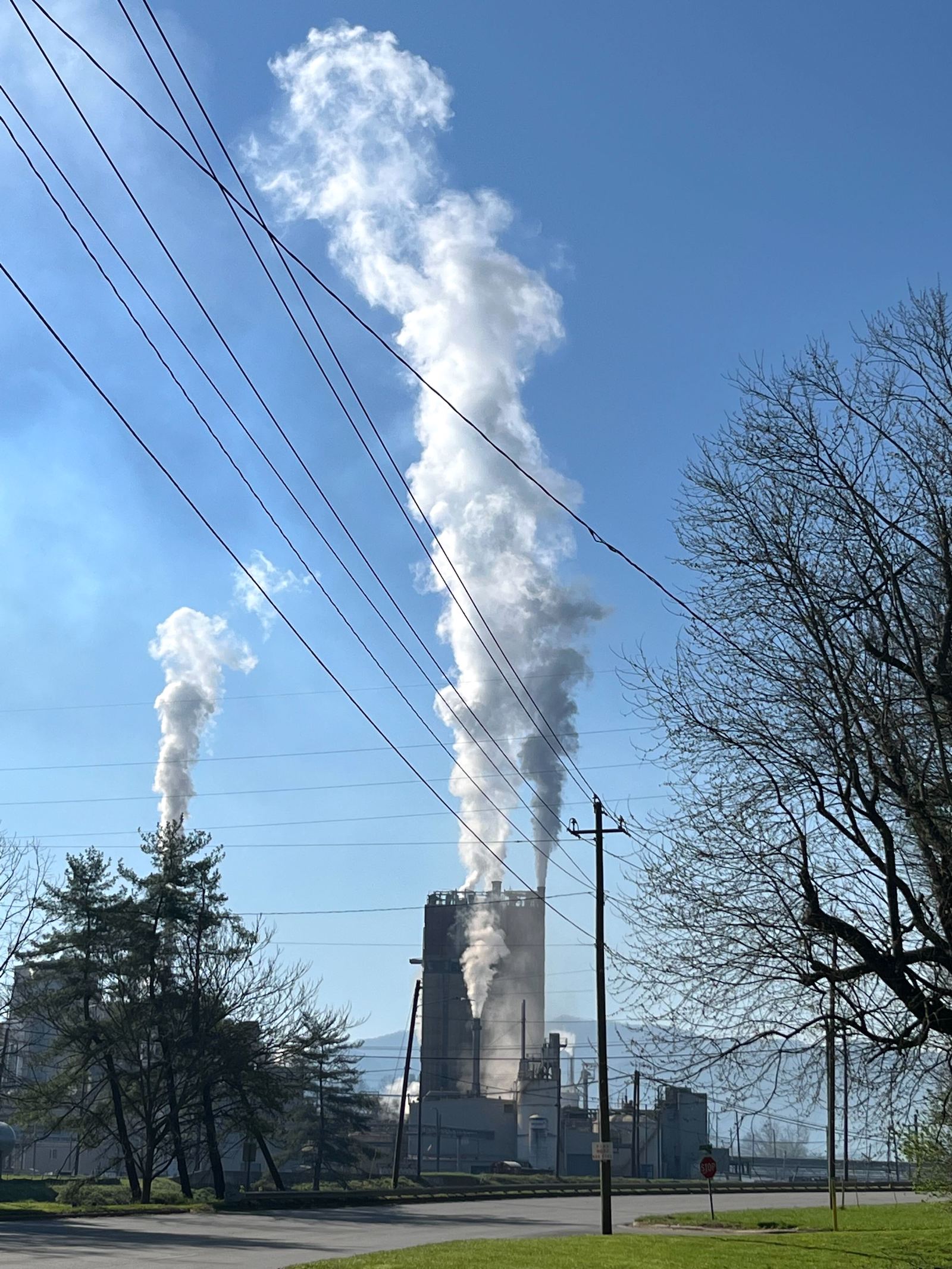
White smoke billows from Evergreen Packaging, as seen from the highway exit to Canton. Nearby residents have complained of a sticky, white dust spraying from the plant. Grist / Katie Myers
On March 6, Pactiv Evergreen abruptly announced the paper mill will close in June due to rising inflation and corporate restructuring. The news has been emotional on both sides of the river, with some in Hartford celebrating as Canton’s families mourn. In the minds of many Hartford residents, Canton’s prosperity had come at their expense; now, the closure may bring a measure of environmental justice and economic growth to Hartford even as Canton faces an uncertain future. But the region, home to Great Smoky Mountains National Park, is immensely popular with visitors, and a growing tourism industry has both communities wondering whether they will be able to ford the rising tide of development. Though new employers are desperately needed, people in both towns fear the rush for revenue and jobs will forever change their communities.
“It’s a double-edged sword,” Brown says.
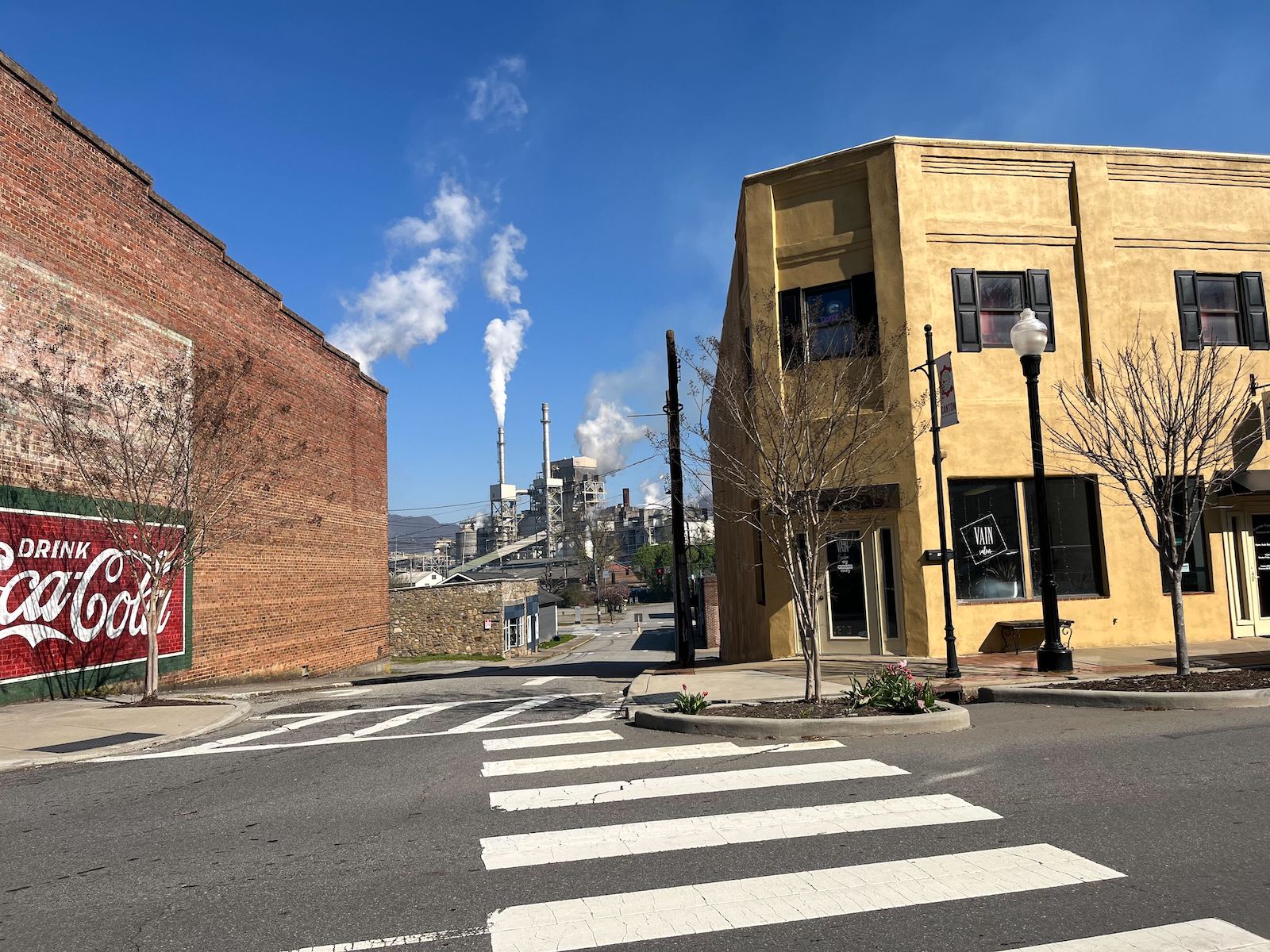
The mill has long been the lifeblood of Canton. People wear shirts that declare they are “Mill Town Proud.” The coffee shop is called Papertown Coffee, and patrons park next to a mural that reads “Papertown.” Some communities hide their factories at the edge of town, but here it proudly stands in the center of everything, visible from every vantage point. Downtown is vibrant and alive, and mill workers fill local businesses at breakfast, lunch, and during shift changes. At noon, they order sandwiches with iced tea and pie at Black Bear Cafe, an old-school lunch counter tucked away from the bustle of downtown Canton. They’re all regulars, known by name. Black-and-white pictures of the good old days line walls, and the hum of conversation fills the air. Many of its employees have family working at the mill.
The Pactiv Evergreen paper mill is visible from every vantage point in town. It is the largest employer in the county. Grist / Katie Myers
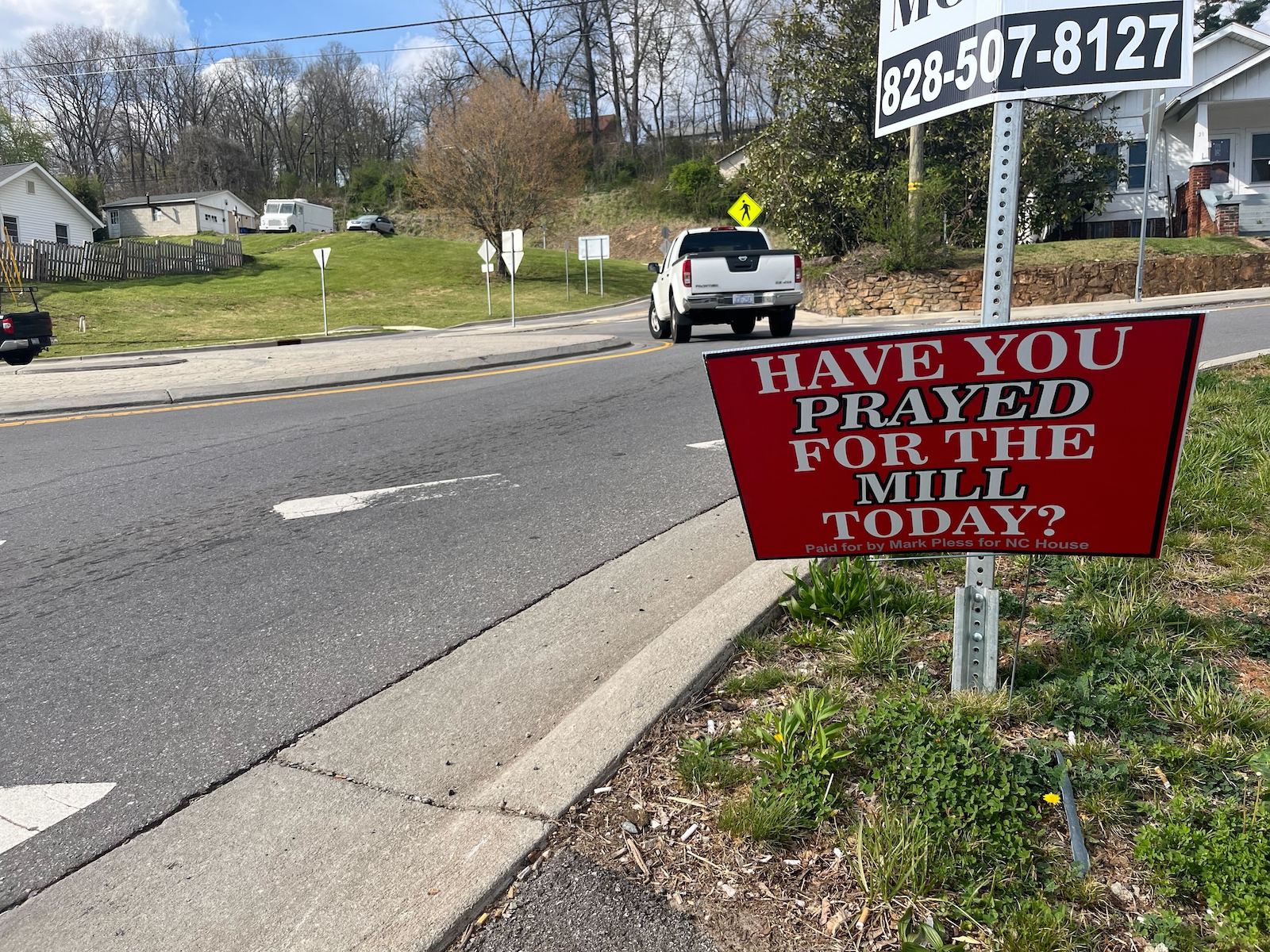
Pride for the paper mill runs deep in Canton, North Carolina. This sign was posted outside an auto parts store in town. Grist / Katie Myers
The mill created quite a different feeling in Hartford, where many considered it an inescapable shadow over their lives. Some old-timers remember companies looking to set up shop in the area, only to pass it by, with the water quality as the suspected but unspoken reason. The water stank, and just as people came to call the town Widowville, the river — named for the passenger pigeons that once migrated through the area — acquired its own nicknames: the Dirty Bird and the Dead Pigeon.
Tensions between the two towns, which sit about 40 miles apart, go back decades. Brown joined an activist group called the Dead Pigeon River Council in the 1980s. For years, the organization protested Champion Paper and attended hearings to demand the mill clean up its operations and stop contaminating the river. The fight for the river led to a lawsuit as scientists uncovered the harmful effects of PFAS, known as “forever chemicals,” found in paper mill effluent. Eventually, Champion agreed to make almost $300 million worth of upgrades, and the river’s color and smell improved. But even after modernization, the employee buyout, and the switch to Pactiv Evergreen, the mill has logged violations of state environmental laws and sought waste-discharge permissions that have concerned environmental advocates, and there’s no removing the dioxin that’s long since settled into the river bottom.
It is against that backdrop that people in Hartford cheered Evergreen’s announcement. “I called our oldest member still living to tell him that they were closing the plant, and we cried together,” Brown says.
Jamie Brown, an environmental justice organizer from Hartford, Tennessee, remembers when the town was called “Widowville” for its high rate of cancer.
Grist / Katie Myers
Canton has faced its own consequences from the mill. In November, a mysterious white dust, like ash, fell from the stacks and settled over town. Below the mill, the Pigeon still runs darker than above it. And pungent smoke blankets the valley. But mill workers’ families say you can get used to anything if it’s how you make your living.
“My uncle used to say it smelled like money,” says one longtime resident who didn’t want to be identified. Like many people in Canton, her life teems with mill workers. Many of the men in her family have spent most of their working lives there. That’s typical of families here; the mill is the largest employer in Haywood County. It seems everyone knows someone who will lose their job come June.
“It’s affected a lot of our family,” she says, holding back tears.
Mill workers, too, are equally tight-lipped to avoid any misunderstandings from an already fractured community. “The morale is down,” says one worker in his 60s. He’s lived here all his life and, like other families, doesn’t plan on leaving. Despite the changes in its leadership, he still feels connected to the mill.
“Morale is down” among employees of the paper mill, according to a longtime employee, left, who did not wish to be named. Despite its changes in leadership, he still feels a connection to the mill. Grist / Katie Myers
“I haven’t said anything bad about the company, have I?” he says, winking. “That’s right.”
The mill was hard work, but with overtime, a mill worker could make $82,000 per year, in a county with a per capita income of $31,200. Everyone belonged to United Steelworkers, Smoky Mountain Local 507, which provided a measure of security and fair treatment. The local has been dissolved, which is standard procedure in a case like this, but union reps from Pittsburgh are working to maximize severance and ensure Pactiv Evergreen honors its contract requirements to the very end.
Unlike so many other industrial towns, Canton had been insulated from the ravages of globalization. Its public works still gleam, its people remain comfortable. The mill paid for the baseball field, the park, the YMCA. It runs the town’s water and sewer plants. A less charitable interpretation would be to say it’s a company town. But many here, like local historian and archivist Caroline Ponton, see it as a generosity, an indicator of Champion’s investment in its workers. But Champion hasn’t run the mill in 20 years.
“As management is further away, it’s … a different chemistry,” Ponton says. And regardless, when Evergreen pulls out, there’s a real question of where the money to continue paying for those things will come from.
A mural in downtown Canton celebrates the town’s identity – and connection to a paper mill that opened in 1908.
Grist / Katie Myers
Such questions come up in any rural community that depends upon one or two industries for their economic survival and watches them leave. Brandon Dennison, the CEO of the West Virginia nonprofit Coalfield Development and a 2019 Grist 50 honoree, calls them “mono-economies” and says they create economic fragility. “The more diversified the local economy, the less catastrophic a single plant or mine closure is,” he says.
Mayor Zeb Smathers has been turning those questions over in his mind constantly ever since he heard, by text message, that Evergreen executives had opted to close the mill. “It felt like a death in the family,” he says. Smathers, whose father was mayor from 1999 until 2011, hopes Canton can ride the coming wave of rapid economic transition, rather than find itself subsumed by it.
Much of western North Carolina and eastern Tennessee are booming, in no small part due the natural beauty of the Smoky Mountains and its waterways. Smathers is proud of the mill’s modernization efforts over the years, even if he acknowledges that it’s been imperfect progress. “We have the best water in western Carolina,” he says, adding that he expects rafting to grow more popular around Canton after the mill closes.
About a dozen kayak and river-rafting businesses line the Pigeon River in Hartford, Tennessee, a town celebrating the closure of the paper mill but wondering about its own future. Grist / Katie Myers
He has reason to be hopeful. Great Smoky Mountains National Park, long the nation’s most popular park, draws about 14 million visitors each year, and more than 200,000 people came to Cocke County in 2020 to ride the Pigeon River. But a recreational economy won’t feed everyone, particularly the old-timers who’ve been in the mill for decades. “You can’t make bubbas into baristas,” Smathers says. The town has been hosting regular job fairs, with a focus on manufacturing, health care, law enforcement, technical jobs, and other higher-paying professional work. Recently, the city government launched milltownstrong.com, a resource for workers as they make their next move.
Smathers often finds himself in meetings with real estate developers and other investors, many of whom he says are practically knocking down his door to get into Canton. They see an opportunity to invest in real estate, open businesses, and spark the town’s boom as a tourist destination. Smathers has asked them to slow down a little as he gathers his thoughts and leads his community through June. There is a sense among locals that they aren’t about to be left behind by this transition, but overrun by it. Smathers sees the economies of east Tennessee and North Carolina growing, but he also knows that the resulting increase in the cost of living has tightly squeezed the area’s working class.
“I think the die has been cast with how expensive it is to live in both respective places,” Smathers says. “It’s not slowing down. But that adds another layer of challenges to this. Because I want the people here to continue to live here and continue to contribute. But if you can’t, if it’s too expensive to live here, well, then that’s going to result in a net loss, not just [of] people, but [of] culture and place and history. It’s one of those things I do lose sleep over.”
A window in downtown Canton is papered with advertisements for job fairs and resources to help mill workers who will lose their jobs by June. Grist / Katie Myers
Folks in Hartford say that, although they feel for the workers, the paper mill closure can only help bring revenue to this cash-strapped side of the Smokies. Cocke County’s per capita income is just under $24,000, and one in five residents lives in poverty. Hartford doesn’t even have a sewer system, as small as it is. Rafting is the county’s second-largest source of revenue, after property taxes, and the number of people coming to ride the river has exploded since the pandemic. These days, Hartford buzzes with rumors of expanding development, a possible new resort that nobody knows much about, increasingly large rafting companies, and construction all along the river road.
Such things bring both trepidation and excitement. And many in Hartford believe Canton has a strong economic base to stand on, and that its high homeownership, pretty downtown, and company-paid parks and other amenities will ease it past this difficult moment into a brighter future.
Brown has long since passed the baton of activism to a younger generation, many of whom, under the banner of newer organizations, continue organizing for environmental and economic justice. Amelia Taylor, who joined the Dead Pigeon River Council as a kid, now works as a guide on the river and remains politically engaged in her community. She wants to see Cocke County prosper, but she doesn’t want to see her home become like Gatlinburg, the glitzy tourist town down the road in Sevier County, Tennessee, where workers live in motels to make ends meet. “Let’s not pave paradise and put up a parking lot,” Taylor says. “They need to create good-paying service jobs, not low-paying service jobs.”
Memorabilia from the campaigns the Dead Pigeon River Council has waged against the paper mill over the years, from the collection of council member Steve Hodges.
Grist / Katie Myers
Taylor is unapologetically elated by the mill’s closure, and plans to throw a party to celebrate it this summer. But she also feels for the workers, some of whom expressed sympathy for Hartford’s plight over the years and fought from inside to bring the mill up to environmental standards. Other workers reacted angrily to protests with threats and shouting, but their ire didn’t change the eventual outcome. In the end, she says, the workers were bound to be sacrificed in the same way Hartford was. ”It’s interesting that the mill created such a sense of pride in Canton, yet now the mill is abandoning them in the name of profits,” she says. “Evergreen never cared about the workers. They were practicing business till it no longer became profitable for them.”
Even as she hopes for the best, Taylor fears that the resort, and the tourism industry rapidly expanding in this corner of the Smoky Mountains, may be much like the paper mill — just another business looking to exploit the environment and those it employs, even as local leaders celebrate it for the jobs and revenue it brings. Such concerns are compounded by the feeling among many in this end of Tennessee that visitors are drawn not just by the natural beauty of the landscape, but by a curated rural mystique, a moonshine-drinking, truck-driving, deer-hunting caricature of mountain people like them. In that way, the people of Hartford and Canton face their uncertain future in tandem, once again brought together by circumstances, and by the river that connects them.
This story was originally published by Grist with the headline Papertown and the Dirty Bird on Apr 27, 2023.
If you're serious about the environment, we all know planting trees is one of the best solutions and tree removal should be a last resort which is why we're committed at Pensacola Tree Services to provide the very best for your home as well as the environment. Read more by going here.
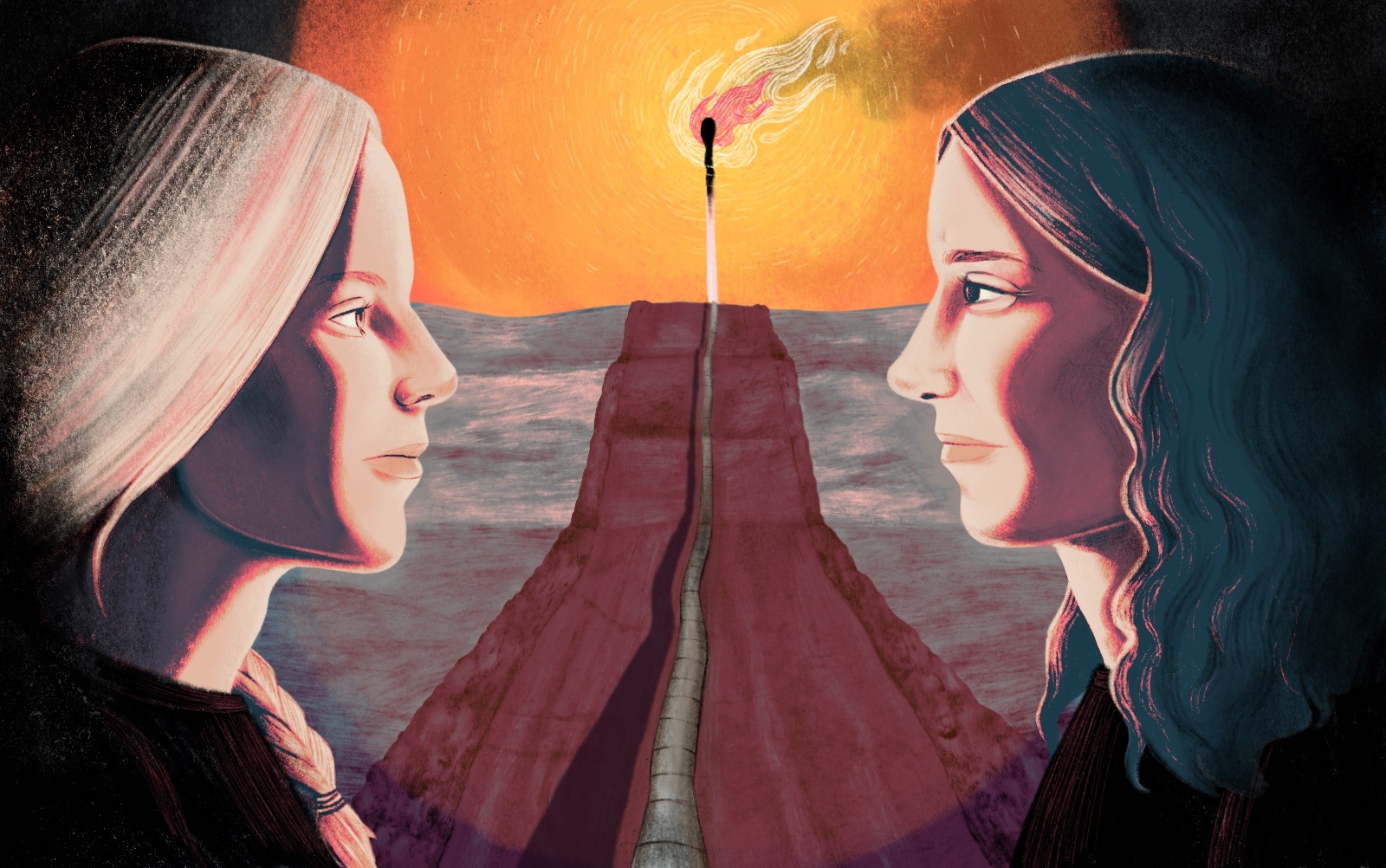
Verso Books, a self-described “radical publishing house,” was not accustomed to getting airtime on major U.S. television networks — or at least it wasn’t until it published Andreas Malm’s How to Blow Up a Pipeline in 2021. With a punchy argument, that property destruction is justified in the face of an ever-worsening climate crisis, and provocative title (the book does not include any practical instructions), Malm found himself at the center of mainstream political discourse.
It’s not that activists should abandon mass action and civil disobedience as tactics in the fight against fossil fuel development, the Swedish academic argues. He just thinks they need to expand their toolbox. In the book, Malm describes taking part in numerous demonstrations over the past several decades, including one at the first annual United Nations climate summit in 1995. Since then, the U.S. has added more than 800,000 miles of fossil fuel pipelines, and Germany has continued to excavate almost 200 million tons of extremely polluting brown coal each year. Clearly, he concludes, blocking intersections and playing dead at U.N. conferences is not enough.
“So here is what this movement of millions should do,” he writes. “Damage and destroy new CO2-emitting devices. Put them out of commission, pick them apart, demolish them, burn them, blow them up. Let the capitalists who keep on investing in the fire know that their properties will be trashed.”
Coming on the heels of a year of massive racial justice demonstrations across the U.S., the book was received with excitement, though hardly all of it was positive. It drew particular ire from Fox News, which published a slew of articles condemning newsrooms like the New York Times and the New Yorker for engaging with Malm’s arguments. On her late-night show, Megyn Kelly pilloried the New Yorker’s editor-in-chief David Remnick for interviewing Malm on the magazine’s podcast.
“How about instead of normalizing this climate terrorism, we talk about how absolutely insane it is,” she lambasted. “To the author who wants to blow up pipelines to help the climate, we say: Thanks but no thanks.”
Malm’s influence, however, appears only to have grown. How to Blow Up a Pipeline attracted the attention of a group of filmmakers who got together and brainstormed how to turn the book into a feature-length movie. The three writers — Ariela Barer, Daniel Goldhaber, and Jordan Sjol — weren’t interested in making a high-grossing blockbuster. They were compelled by Malm’s argument and wanted to create something that could make it tangible.
The resulting film, which premiered in U.S. theaters earlier this month, is an eco-terrorist heist thriller that retains Malm’s iconic title while supplying an original narrative inspired by his argument. Following a recent screening at New York’s Angelika Film Center, co-writer and star Ariela Barer said that filmmakers’ intention was to create propaganda, and in doing so, shift the cultural imagination around how to combat climate change. Her co-writer Daniel Goldhaber, who directed the film, added that the fundamental question at the core of the movie is whether attacking and destroying a pipeline could be considered an act of self-defense.
“From an ethical and moral standpoint, we all sort of recognize that if someone is pointing a gun at you with the intent to kill, you have a right to take that gun away from them and dismantle it,” he said. “The fossil fuel industry has a gun to the proverbial head of the world, and the movie is asking the question: Do we have a right to take it away from them and dismantle it?”
The film’s premise is simple. Eight people from across the country converge on an abandoned house in the desert for 24 hours to execute a plan to blow up a pipeline that snakes through the Permian Basin, the oil-and-gas-producing heartland of Texas. Their hope is that their destruction of fossil fuel infrastructure will inspire others to do the same, and that the cumulative effect will be a meaningful reduction in the extraction and burning of carbon-emitting fuels.
“Structural damage is the point,” one character insists. “I don’t want to rebuild anything,” says another. Blowing up one pipeline won’t shutter the fossil fuel industry, but sparking a series of copycat actions across the country might have a real impact.
The characters know that their extreme tactics will, at least initially, make their movement unpopular. In one scene, the group’s lone skeptic notes that spiking oil prices — the logical result of a widespread blow to fossil fuel production — will hit poor people the hardest. But the film does not linger on these questions; it’s clear that for these characters, the stakes are too high to change course.
As we learn more about who they are, we begin to understand why: There’s a man saddled with debt after fighting the government in court for taking his land to build a pipeline, a young woman whose mother died during a heat wave in Chicago, and her best friend, who has a rare type of leukemia known to affect people who grew up near oil refineries.
These context-setting moments are one of the film’s greatest strengths. They establish the stakes for individuals on the front lines of oil and gas development and make clear that the burdens of industrial pollution and climate change aren’t spread equally. All of the characters’ stories are completely plausible and represent different ways in which the fossil fuel industry harms Americans today.
But making a film with the intention of promoting an idea risks flattening certain dimensions of the world it portrays. The West Texas setting is presented as hostile terrain, an empty expanse of foul chemical odors, ground zero for the destruction of the climate and the earth. The only character from Texas is a tough-looking Southern guy whose family was forcibly removed from land they’ve owned for generations after the government greenlit a pipeline project there. In one scene, he offers a vegan deer meat; in another, his wife tells someone who asks for water that they only have beer.
These moments of apparent comic relief miss an opportunity to more deeply reckon with the South’s role in climate justice, given that so much of the country’s energy resources and petrochemical products are drawn from the region. The depiction of a pair of gun-wielding pipeline workers later in the movie doubles down on the notion that anyone connected to a fossil fuel company is its blind and unscrupulous defender. In fact, the relationship that many southerners have to the industry is complicated, tied up in identity and health and livelihood. These are the people who have the most to lose when fossil fuels are retired from use. By immediately positioning them as the antagonists, the filmmakers have failed to acknowledge that any just transition away from oil and gas must offer the communities extracting the raw materials something, too.
That the film was envisioned from the outset as a piece of propaganda raises the question of who its intended audience is. At the New York screening, Goldhaber argued that mainstream protest tactics have not been effective in the fight against climate change so far.
“At a certain point you have to ask the question, ‘do you need to change your tactics to force the system to reform?’” he asked.
The “you” appears to reference individuals in the climate movement who have pursued non-violent actions such as mass protest and divestment campaigns, intended to pressure governments and institutions into curbing fossil fuel development. While these measures may have helped galvanize support for climate-friendly policies and mainstream concepts like climate reparations, they have done little to curb the power of the fossil fuel interests that are so often the targets of protesters’ ire.
Today, companies like ExxonMobil and Shell, emboldened by record-breaking profits following Russia’s invasion of Ukraine and the resulting energy crisis, are expanding their exploration efforts around the world. Despite the Biden administration’s passage of numerous landmark laws designed to spur investment in the clean energy sector, recently approved mega-projects in Alaska and along the Gulf Coast promise to lock in new fossil fuel infrastructure for the next several decades. These developments come as scientists warn that no new fossil infrastructure can be built if we are to limit global temperature rise to 1.5 degrees Celsius above pre-industrial levels and avoid the most disastrous impacts of climate change.
In light of these conditions, How to Blow Up a Pipeline functions as a sort of wake-up call for peaceful activists to consider a different approach. As the book and film have gained popularity, however, law enforcement has taken note. In 2021, an intelligence command center in Texas distributed a memo that linked to an interview with Malm and warned of activists interested in sabotaging fossil fuel infrastructure. A separate center in Kansas City, Missouri, alerted law enforcement to a “developing threat” related to the film earlier this month, according to The Intercept.
For now, it remains to be seen whether the movie will be remembered as a unique entry into the heist genre or a work of propaganda that spurred radical action. What’s undeniable is that Malm’s book and the film adaptation have dusted off an old tool for political change and laid it out for use.
“The task for the climate movement isn’t to wait until it’s extremely late, which it already is, but to move ahead and to use opportunities of extreme climate disaster, which are raining upon us, to drive this point home to people,” Malm told Remnick on the New Yorker’s podcast. “We can’t have more fossil fuel infrastructure and a habitable planet at the same time. We need to choose one or the other.”
This story was originally published by Grist with the headline How to blow up ‘How to Blow Up a Pipeline’ on Apr 27, 2023.
I'd like to take this time to remind you that climate change is real. The actions of big governments continue to pollute and poison the environment. Whenever feasible, we should all plant more trees and preserve our existing ones. That's why Tree Services in Pensacola strives to do both while also improving your home's landscaping. Read more about how they're making changes at https://treeservicespensacola.com
This transcript has been edited for length and clarity.
California and Arizona are currently fighting each other over water from the Colorado River. But this isn’t new – it’s actually been going on for over 100 years. At one point, the states literally went to war about it. The problem comes down to some really bad math from 1922.
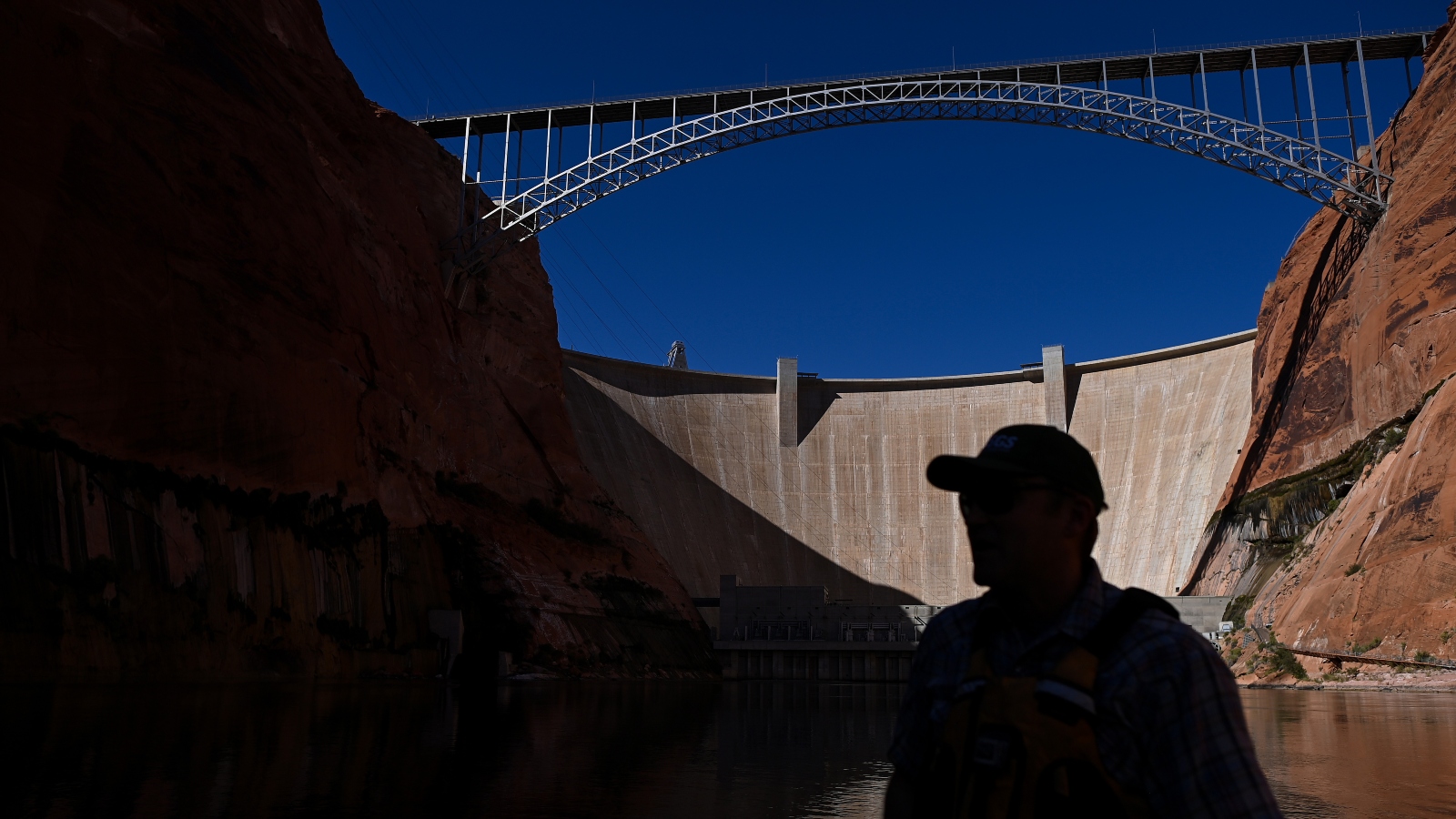
To some extent, the crisis can be blamed on climate change. The West is in the middle of a once-in-a-millennium drought. As temperatures rise, the snow pack that feeds the river has gotten much thinner and the river’s main reservoirs have all but dried up.
But that’s only part of the story: The United States has also been overusing the Colorado for more than a century thanks to a byzantine set of flawed laws and lawsuits known as “the law of the river.” This legal tangle not only has been over-allocating the river, it also has been driving conflict in the region, especially between the two biggest users, California and Arizona, both trying to secure as much water as they can. And now, as a massive drought grips the region, the law of the river has reached a breaking point.
The Colorado River begins in the Rocky Mountains and winds its way southwest through the U.S., twisting through the Grand Canyon and entering the Pacific at Baja California. In the late 19th century, as white settlers arrived in the West, they started diverting water from the mighty river to irrigate their crops, funneling it through dirt canals. For a little while, this worked really well. The canals made an industrial farming mecca out of desert that early colonial settlers viewed as “worthless.”
Even back then, the biggest water users were Arizona and California, which took so much water that they started to drain the river farther upstream, literally drying it out. According to American legal precedent, whoever uses a body of water first usually has the strongest rights to it. But other states soon cried foul: California was growing much faster than they were, and they believed it wasn’t fair that the Golden State should suck up all the water before they got a chance to develop.
In 1922, the states came to a solution — kind of. At the suggestion of a newly appointed cabinet secretary named Herbert Hoover, the states agreed to split the river into two sections, drawing an arbitrary line halfway along its length at a spot called Lee Ferry. The states on the “upper” part of the river — Colorado, Utah, Wyoming, and New Mexico — agreed to send the states on the “lower” end of the river — Arizona, California, and Nevada — what they thought was half the river’s overall flow, 7.5 million acre-feet of water each year. (An acre-foot is enough to cover an acre of land in a foot of water, about enough to supply two homes for a year.)
This agreement was supposed to prevent any one state from drying up the river before the other states could use it. The Upper Basin states got half and the Lower Basin states got half. Simple.
But there were some serious flaws to this plan.
First, the law of the river overestimated how much water flowed through the river in the first place. The states’ numbers were based on primitive data from stream gauges placed at arbitrary points on the waterway, and they took samples during an unusually wet decade, leading to a very optimistic estimate of the river’s size. The river would only average about 14 million acre-feet annually, but the agreement handed out 15 million to the seven states!
While the states weren’t able to immediately use all this water, it set in motion the underlying problem today: The states have the legal right to use more water than actually exists in the river.
And you’ll notice that the Colorado River doesn’t end in the U.S. – It ends in Mexico. Initially, the Law of the River just straight up ignored that fact. Decades later, Mexico was squeezed into the agreement and promised 1.5 million acre-feet, further straining the already over-allocated river.
On top of all of this, Indigenous tribes that had depended on the river for centuries were now forced to compete with states for their share of water, leading to these drawn-out lawsuits that took decades to resolve.
But in the short-term, Arizona and California struck it rich – they were promised the largest share of Colorado River water and should have been primed for growth. For Arizona, though, there was a catch: The state couldn’t put their water to use!
The state’s biggest population centers in Phoenix and Tucson were hundreds of miles away from the river itself, and it would take a 300-mile canal to bring the water across the desert — something the state couldn’t afford to build on its own. Larger and wealthier California was able to build all the canals and pumps it needed to divert river water to farms and cities. This allowed it to gulp up both its share and the extra Lower Basin water that Arizona couldn’t access. California’s powerful congressional delegation lobbied to stop Congress from approving Arizona’s canal project, as the state wanted to keep the Colorado River to itself.
Arizona was furious. And so, in 1934, Arizona and California went to war — literally. Arizona tried to block California from building new dams to take more water from the river, using “military” force when necessary.
Arizona sent troops from its national guard to stop California from building the Parker Dam. It delayed construction, but not for very long because the boat got tangled up in some electrical wire and had to be rescued.
For the next 30 years, Arizona and California fought about whether Arizona should be able to build that canal. They also sued each other before the Supreme Court no fewer than 10 times, including one 1963 case that set the record for the longest oral arguments in the history of the modern court, taking 16 hours over four days and involving 106 witnesses.
That 1963 case also made some pretty big assumptions: Even though the states now knew that the initial estimates were too high, the court-appointed expert said he was “morally certain that neither in my lifetime, nor in your lifetime, nor the lifetime of your children and great-grandchildren will there be an inadequate supply of water” from the river for California’s cities.
A few years after that court case, in 1968, Arizona finally struck a fateful bargain to ensure it could claim its share of the river. California gave up its anti-canal campaign and the federal government agreed to pay for the construction of the 300-mile project that would bring Colorado River water across the desert to Phoenix. This move helped save Arizona’s cotton farming industry and enabled Phoenix to eventually grow into the fifth-largest city in the country. It seemed like a success — Arizona was flourishing!
But in exchange for the canal, the state made a fateful concession: If the reservoirs at Lake Powell and Lake Mead were to run low, Arizona, and not California, would be the first state to make cuts. It was a decision the state’s leaders would come to regret.
In the early 2000s, as a massive drought gripped the Southwest, water levels in the river’s two key reservoirs dropped. Now that both Arizona and California were fully using their shares of the river, combined with the other states’ use, there suddenly wasn’t enough melting snow to fill the reservoirs back up. A shrinking Colorado River couldn’t keep up with a century of rising demand.
Today, more than 20 years into the drought, Arizona has had to bear the biggest burden. Thanks to its earlier compromise decades earlier, the state had “junior water rights,” meaning it took the first cuts as part of the drought plan. In 2021, those cuts officially went into effect, drying out cotton and alfalfa fields across the central part of the state until much of the landscape turned brown. Still, those cuts haven’t been enough.
This century, the river is only averaging around 12.4 million acre-feet. The Upper Basin states technically have the rights to 7.5 million acre-feet, but they only use about half of that. In the Lower Basin, meanwhile, Arizona and California are gobbling up around 3 and 4 million acre-feet respectively. In total, this overdraft has caused reservoir levels to fall. It’s going to take a lot more than a few rainy seasons to fix this problem.
So, for the first time since the law of the river was written, the federal government has had to step in, ordering the states to reduce total water usage on the river, this time by nearly a third. That’s a jaw-dropping demand!
These new cuts will extend to Arizona, California, and beyond, drying up thousands more acres of farmland, not to mention cities around Phoenix and Los Angeles that rely on the Colorado River. These new restrictions will also put increased pressure on the many tribes that have used the Colorado River for centuries: tribes that have water rights will be pressured to sell or lease them to other water users, and tribes without recognized water rights will face increased opposition as they try to secure their share.
And, Arizona and California are still fighting over who should bear the biggest burden of these new cuts. California has insisted that the law of the river requires Arizona to shoulder the pain, and from a legal standpoint they may be right. But Arizona says further cuts would be disastrous for the state’s economy, and the other five river states are taking its side.
Either way, the painful cuts have to come from somewhere, because the law of the river was built on math that doesn’t add up.
This story was originally published by Grist with the headline The very bad math behind the Colorado River crisis on Apr 26, 2023.
If you're serious about the environment, we all know that planting trees is one of the most effective measures, and tree removal should be a last resort. We at Pensacola Tree Services are dedicated to offering the best for your home as well as the environment, therefore we're committed to delivering it by making it as simple as possible. For responsible tree removal visit us here Tree Services Pensacola
Nearly two dozen lawsuits filed by cities and states aim to put fossil fuel companies on trial for deceiving the public about climate change. But they’ve been stuck in legal limbo for half a decade, with companies deploying several maneuvers to block them. Now a surprising source has unleashed those lawsuits: the conservative-dominated Supreme Court.
On Monday, the justices rejected petitions from Chevron, Shell, BP, and other oil companies to move these cases from the state courts where they were filed to federal courts, an arena considered more friendly to the industry. The Supreme Court’s rejection brings an end to a long jurisdictional battle, meaning that cases in Colorado, Maryland, California, Hawaii, Rhode Island, and more can finally proceed — potentially toward jury trials.
“It’s the industry’s worst nightmare to have to explain their lies in front of a jury,” said Richard Wiles, president of The Center for Climate Integrity, an environmental advocacy organization.
The wave of lawsuits began in 2017, when cities and counties in California sued an array of oil, gas, and coal companies using state consumer protection laws that prohibit deceptive advertising. The lawsuits were set in motion by revelations that ExxonMobil had known about the dangers of burning fossil fuels since 1977, but publicly cast doubt on the science and worked to block legislation to restrict carbon pollution.
Oil companies have tried to shuffle these lawsuits to federal courts for years, arguing that they weren’t really about consumer protection laws, but the broader matter of climate change, a federal concern. Judge after judge dismissed this line of reasoning, until it went all the way to the Supreme Court. Last month, the Biden administration urged the court to leave these lawsuits to the states — exactly what it ended up doing.
Justice Brett Kavanaugh wanted to hear an argument from ExxonMobil and Suncor Energy, according to the order list the court released on Monday, but there weren’t enough justices on his side. Justice Samuel Alito recused himself from the decision for unstated reasons, though some have noted he owns stock in Phillips 66 and ConocoPhillips, among the fossil fuel companies pushing to move these cases to federal courts.
“After almost six years, things are finally about to get interesting,” said Karen Sokol, a law professor at Loyola University in New Orleans. These procedural battles weren’t just time-consuming — they were also kind of boring. The media and the public simply aren’t captivated by the esoteric debate over whether a case belongs in federal or state courts, Sokol said.
Industry groups lamented the Supreme Court’s decision. An attorney for Chevron told Reuters he was still confident that the cases would ultimately be dismissed in state court because the magnitude of the issue required a federal response. A lawyer with the National Association of Manufacturers’ legal arm said that the Supreme Court’s move risks creating a “patchwork of state court approaches to important public policy matters that are inherently federal and global in nature.”
If anything, the long waiting period has strengthened the case against oil companies, with recent revelations bolstering the argument that they understood the science behind climate change but told the public something else. A study earlier this year found that Exxon’s internal scientists predicted climate change with startling accuracy 40 years ago by quantifying how their projections matched up with real-world temperature changes. In recent months, a congressional investigation into the fossil fuel industry’s role in misleading the public about climate change released hundreds of pages of subpoenaed documents. An internal email from a Shell employee in 2020, for example, said that the company’s public promotion of a path toward zeroing out its carbon emissions “has nothing to do with our business plans.”
And now that the court cases can finally proceed, more evidence is likely to be uncovered. The next major step before a trial is “discovery,” in which both sides try to uncover evidence that could help make their case in court. It could unearth new documents related to what oil companies learned from their in-house scientists and to what extent executives suppressed that information or misrepresented it publicly. Industry employees could also be called in to answer questions.
A protester holds a photo of Sean Hannity, a Fox talk show host, along with a quote released in court documents outside of Fox News headquarters, Manhattan, New York, April 25, 2023. Photo by Erik McGregor / LightRocket via Getty Images
“The discovery system is quite powerful in terms of unveiling hidden information,” more powerful than some federal agencies, Sokol said. A lot of what the public learned about the tobacco industry’s effort to cover up the link between lung cancer and smoking, for example, came out of the discovery process. Tobacco companies paid hundreds of billions of dollars in settlements.
It’s not a guarantee that the public will be able to see these documents or transcripts from witnesses in the climate cases, however. The industry might argue that the information is a “trade secret,” Wiles said. Judges get to decide what evidence gets released.
Documents might come out in a slow drip, with lawyers attaching them to their arguments as supporting evidence, Wiles said, but there’s a chance they could be released all at once. In the recent Dominion Voting Systems lawsuit accusing Fox News of defamation, for instance, the judge released hundreds of pages of documents in the public interest, showing that the media company’s staff privately derided conspiracy theories about the 2020 election while promoting them on air. If oil companies decide to settle the consumer protection cases before going to trial, one stipulation might be that documents be made public, as was required by settlements for tobacco and opioid lawsuits.
The discovery process could take a while — and there are still plenty of ways oil companies could draw these cases out — but eventually, they could wind up in front of juries, where oil companies will have to defend a well-documented trail of deception in front of real people. And with these cases all unfolding in different state courts, the industry will have to fight each battle separately. “We only have to win in a couple to really get somewhere,” Wiles said, referring to the cities and states suing oil companies. “They basically have to win everywhere.”
This story was originally published by Grist with the headline The Supreme Court just unleashed a flood of lawsuits against Big Oil on Apr 26, 2023.
If you're concerned about the environment, you're aware that planting trees is one of the most effective things you can do. Trees absorb carbon dioxide and provide oxygen, which helps to preserve the environment. If a tree has to be removed, then be sure it's a last resort. Pensacola Tree Removal provides stump grinding, tree trimming, and stump removal.
Spring fire season is a regular occurrence in the eastern U.S. It’s not nearly as dramatic as what’s seen across the West, mostly due to the region’s increased rainfall and high humidity, but it can cause serious damage. Wildfires have scorched 351,821 acres so far this year, and firefighters throughout the Mid-Atlantic and south remain on alert, with “red flag” warnings and burn bans across multiple states.
Things got off to a roaring start in southern New Jersey, where firefighters have battled 160 wildfires, four of which were major. The largest of them tore a streak across the rural Pine Barrens region and saw 200-foot walls of flames earlier this month; it burned nearly 4,000 acres, driven by record heat that included nighttime temperatures rarely dropping below the 60s. As in the West, warming conditions driven by climate change are leading to longer fire seasons that begin earlier in the year.
“We’re seeing this peak fire season that was confined to about a 2-3 month period extending into a 4-5 month period,” Greg McLaughlin, administrator and chief of the New Jersey Forest Fire Service, told WHYY News. Fire season in the Garden State typically runs from March through May, but these days it’s been starting in February and heading into late June and early July, he said.
Unusually warm temperatures, low humidity, and gusting winds drove the fires that burned thousands of acres in Pendleton County, West Virginia and in Daniel Boone National Forest in south-central Kentucky last week.
In coastal North Carolina, 245 federal and state firefighters continue battling a blaze that has blackened 36,000 acres in Croatan National Forest. The conflagration started last Wednesday evening, and crews have contained just 15 percent of it. The immense amount of smoke has led to air quality warnings in 21 nearby counties, encouraging residents to stay inside and limit outdoor exercise. While the Croatan is adapted to fire, which is a normal part of the ecosystem, officials say the current blaze is unusually large – the second-worst in the forest’s history.
”This is larger than normal,” said James Wettstaed, a U.S. Forest Service public information officer currently stationed in North Carolina.
Though the fires haven’t taken any lives or burned a large number of structures, exposure to all that smoke carries health risks. A 2022 Stanford University study found that it increases the incidence of preterm births, for example. Researchers at University of California-Davis were funded this year for further research into the health risks of wildfire smoke, particularly as fires burn closer to populated areas. Wildfire risk to human health also increases as communities increasingly encroach on the wildlands, a major issue in the densely settled Mid-Atlantic.
Although there is widespread consensus that the warmer, drier conditions created by climate change contribute to more frequent, and more intense, wildfires, regional foresters and firefighters say they can’t be sure a specific fire is the result of climate change. From the ground, it’s difficult to have a bird’s-eye view.
For her part, Nancy Ellsworth, center manager for the Southeast Interagency Fire Center, feels the wildfire season isn’t out of the ordinary. “Normally this is the last month of fire season,” she said, expressing hope that late spring rains would dampen the flames.
But the agency’s spring outlook assessed a higher-than-usual wildfire risk across the Southeast. “Meteorological winter was nothing short of special across the South, with many reporting stations experiencing a top-five warmest winter,” the agency reported. “Wintertime high temperature records have been set in nearly every state.”
Extreme temperature fluctuations increased the risk of fuel accumulation, with an abrupt cold snap around Christmas leading to an increase in highly flammable dead leaf litter. Florida had the worst drought projections, but it appears that recent heavy rains drenched the state instead. A combination of long-term drought and heavy rains may have in fact worsened the recent Fort Lauderdale floods.
The agency’s Eastern fire center also assessed increased fire risk, particularly within the coastal Mid-Atlantic. Drought conditions have increased across the U.S., even in the normally wet, leafy climes of the U.S. Mid-Atlantic and Southeast. According to the U.S. Drought Monitor, the area saw abnormally dry conditions in the first quarter of 2023. Next year’s global switch from La Nina to El Nino conditions also brings uncertainty, with projected warmer, drier conditions across the East.
Wettstaed hopes for the rains too. But nothing’s certain until it comes, and until then, fire season goes on. “If we don’t get the rains, that’s another matter,” he said.
This story was originally published by Grist with the headline Spring wildfires in the Eastern US got off to a roaring start this year on Apr 25, 2023.
If you're serious about the environment, we all know planting trees is one of the best solutions and tree removal should be a last resort which is why we're committed at Pensacola Tree Services to provide the very best for your home as well as the environment. Read more by going here.
This is Season 3, Episode 1 of Grist’s Temperature Check podcast, featuring first person stories of crucial pivot points on the path to climate action. Listen to the full series: Apple Podcasts | Stitcher | Spotify
“I would like to see the Mississippi River clean and not full of chemicals, because the industries, they dump benzene in the river, in our drinking water. They dump formaldehyde in our drinking water, and other chemicals. But my dream is to see St. James the way it was when I was a little girl. That’s what I would love.”
– Sharon Lavigne
Episode transcript
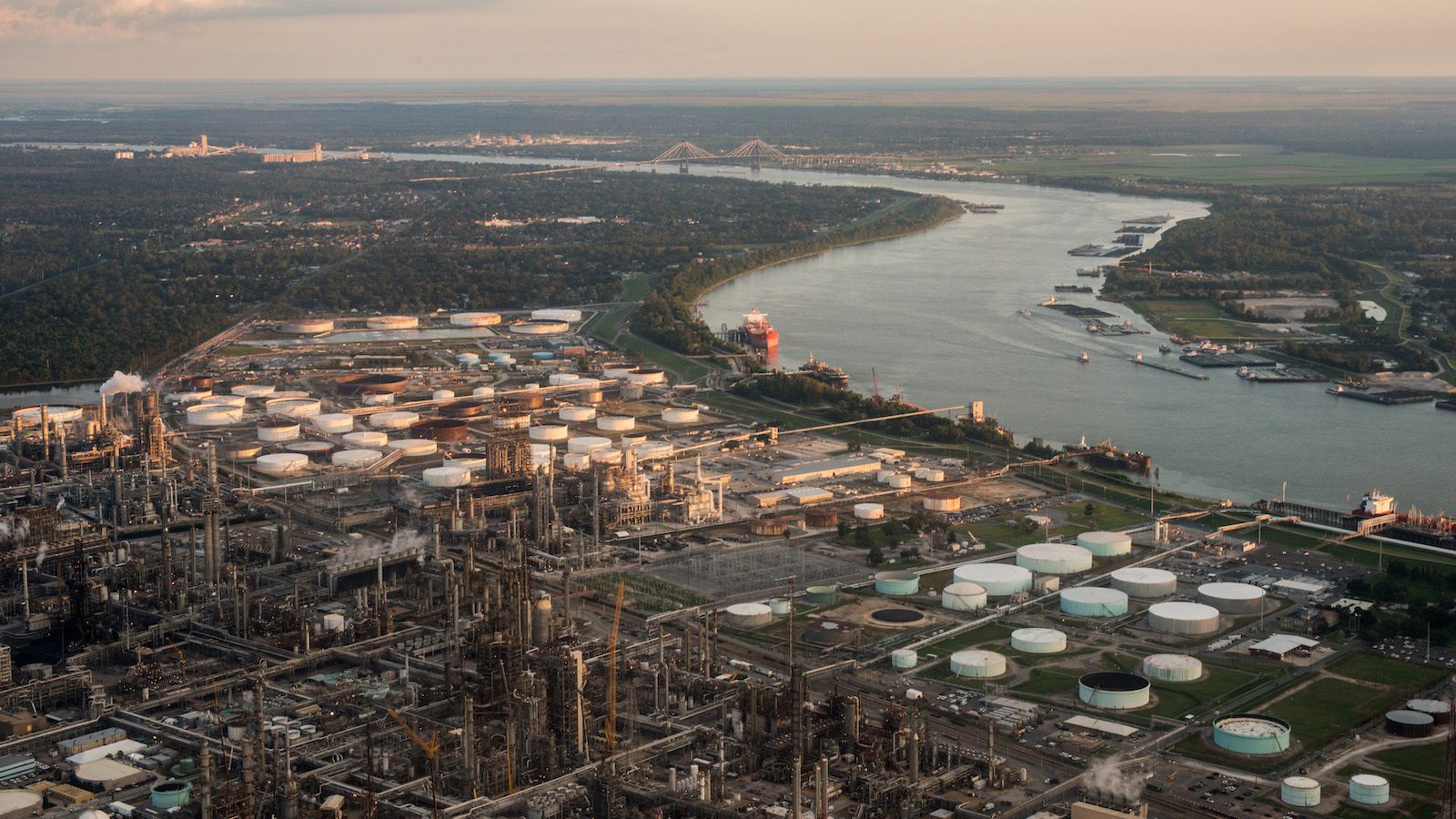
Sharon Lavignelives in St. James Parish, Louisiana, in an area known as “Cancer Alley.” If you haven’t heard of it, Cancer Alley is an 85-mile stretch of petrochemical plants, oil refineries, and other industrial operations that runs from New Orleans to Baton Rouge along the Mississippi River. Air pollution in the area means that residents face a lifetime cancer risk estimated to be up to 47 times higher than what the EPA deems acceptable. And Black communities are hit the hardest.
Sharon spent most of her life as a special education teacher. But as the years went by, the air quality in St. James Parish got worse and worse. Eventually, Sharon learned the connection between the plants, the air and the terrifying rates of sickness and death in her community, and she decided to do something about it. This is her story.
My name is Sharon Lavigne, and I’m 70 years old, and I am an environmentalist and the director and founder of RISE St. James.
I grew up in St. James Parish in a little area called Chatman Town, and we had gardens of vegetables. My daddy raised cattle. We ate off the land. We grew everything … just about everything. In the wintertime we would have figs. My momma would cook the figs in the summer and preserve the figs. And that would be for our meals in the winter. And by then we would have the fresh cow milk. You’d milk the cow and the next day, we would have this fresh cow milk, because we put it in the refrigerator and it’d be nice and cold and taste good. We didn’t have to buy eggs or milk or anything like that. We got it off the farm. And my daddy raised the hogs, we ate pork. And to me, it was a dream come true.
The air was clean. I could breathe the air when I walked out of the door. And we weren’t sick. We didn’t have any type of illnesses or anything. We didn’t have any sinus problems, I can tell you that much. We didn’t have sinus – I didn’t even know what sinus was. I didn’t even have headaches. I didn’t have anything wrong at the time.
When the first plant came, my daddy was in politics and he was an environmentalist or leader, whatever you want to call him. And I could hear him telling my momma, “Ooh we got a plant coming to St. James and blah, blah, blah,” all excited. And we all started to smell things, but we didn’t let it worry us, because we really didn’t know what it was anyway. We just smell something.
Chemical plants and factories line the Mississippi River in Louisiana.
Giles Clarke / Getty Images
Plants line the Mississippi River in the area known as “Cancer Alley.” (Giles Clark/Getty Images)
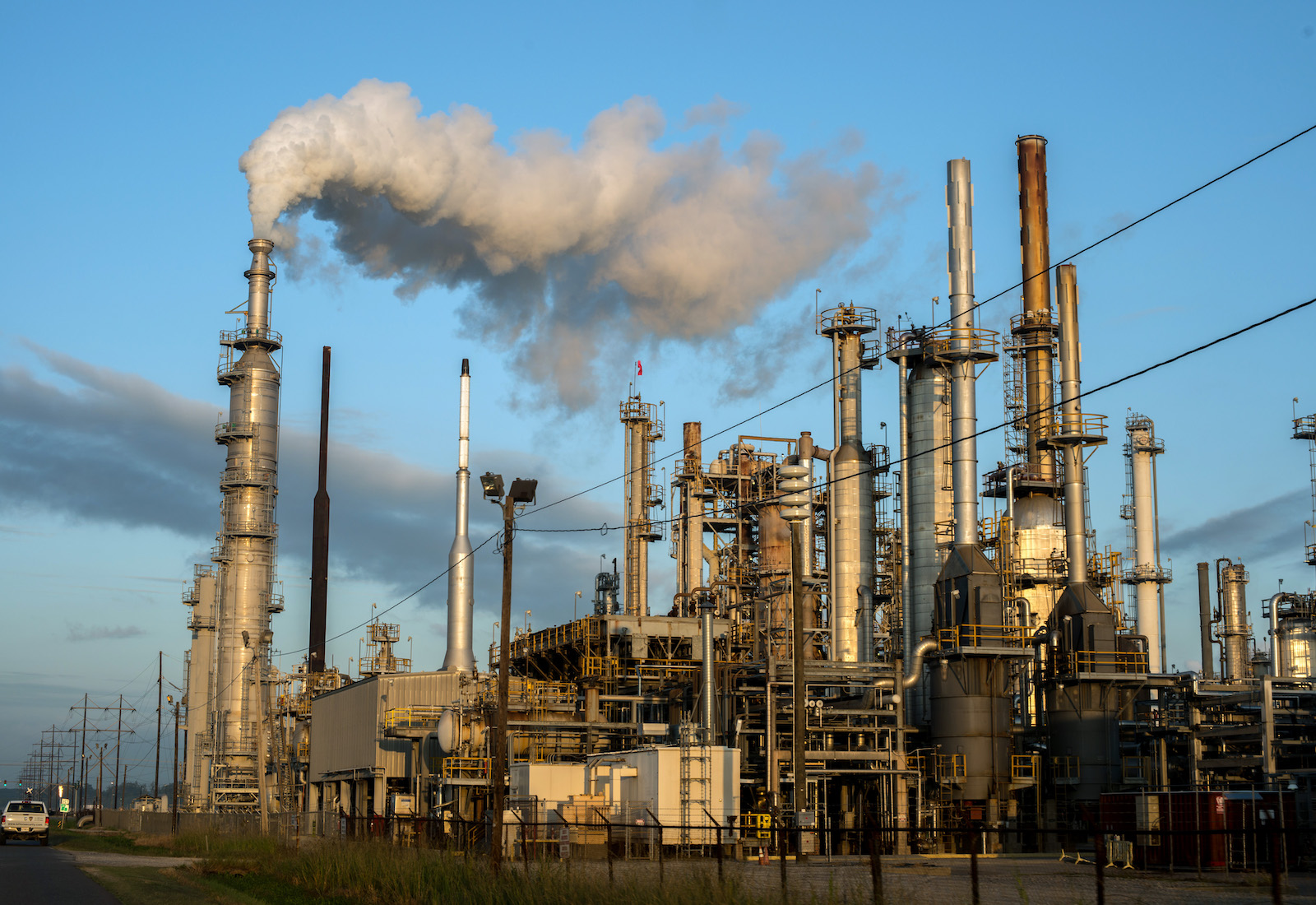
Smoke billows from one of many chemical plants in the area known as “Cancer Alley.”
Giles Clarke / Getty Images
You better not take a deep breath today. You will get a breath full of chemicals going down your throat. And you see, within a ten mile radius we have 12 industries, and that’s all you see. At night it looks like it’s lit up like Christmas time it’s so many lights out there. And flares. Sometimes flares late at night, sometimes early in the morning, and sometimes during the daytime. I’m so tired of driving down Highway 18 and get a smell of these chemicals. Ammonia, different smells, and sometimes it smells like a rotten egg. A smell that goes down to your throat. And sometimes my throat burns.
I have a friend right now with liver cancer and it’s spreading. We have another friend that used to cut the grass in the graveyard. He is down with cancer right now. He can’t work anymore. I have two brothers with cancer. One had the prostate taken out. And they both worked at plants. My brother’s wife, the one that had the prostate cancer, his wife died with cancer in the breast, and she worked at industry. That was a friend of mine, we were the same age. Sometimes I don’t like to talk about it. It hurts. And I feel like .. I feel like we are next. I just feel like that.
I’m going to a funeral Saturday. I have a funeral tomorrow of a friend. I imagine myself laying in that casket. I really do. Especially friends that I know that died because of industry. We just buried one of my friends. He was working at a plant, and his wife says she know the plant caused him to get sick after 40 years. And she say – she hugged me so tight and she told me that she think it came from there. That’s what I think so too. Other people say, “Oh, no, it wasn’t because of that, it was stress.” I say it might have been stress because of that. So I have people are trying to dispute it. If we only had the proof, if we only had a toxicology lab that we can take samples and have people working in there and really let the world know what they’re doing to us. I know it’s industry. It wasn’t industry before. People were stressed. They wasn’t dying because they was stressed. You pray and you get over the stress. But you can’t get over those chemicals in your body.
I started teaching back in the ‘80s and I didn’t pay attention to the industry. All I know I’d pass in front of them, but I used to smell things. I said, “What that smell is?” and just go on about my business. And I thought everywhere was smelling, I didn’t know it was just St. James. I know that sounds crazy for me to say something like that, but I thought the world was smelling, not knowing that we have industry here and it could be the reason why I’m smelling this. I never once thought that when I first started teaching.
I was a special education teacher and I taught regular ed for one year. My first year I worked for Assumption Parish. I taught the severe profile. They were really special ed. And then – I stayed out a year, then I started back in St. James Parish. My daddy told a school board member that his daughter paid tax in St. James and she wanted to get a job in St. James. They created me a job, and they asked me what school I wanted to be at, and I told them “the high school.” So I was at the high school. When I went to the high school I was teaching English, science, social studies, and math. It wasn’t to the severe profile children. It was children – they were regular ed but they might have been weak in one subject. They might have was weak in English or reading or math. And so those are the ones that I taught that was called “slow learners.” And then I left from there and they asked me if I wanted to work with the severe profile. I said, “I don’t care.” When I retired, I was teaching the severe profile.
I was a teacher that showed compassion. I was a teacher that really cared, and I wanted the students to learn. And when they didn’t come to school, I called the house to find out why they didn’t come. One lady said, “You the only person that does that.” You gotta care about your job, care about the children, not just doing it for a paycheck. Trust me, the children know if you care. And don’t talk down to them. If you talk down to the students then they’re not going to want to listen at you teaching them. So you try to build them up. Like if your child in the classroom and he made a D on his test, and his friend made a B, they might make fun of the one that made the D. And I would tell him something nice to make him feel well, you know, you made a mistake this time, but it wasn’t that big of a mistake. Next time, you’re going to do better.
I really enjoyed the students. And for Christmas, I’d like to give them a little Christmas party or something. And I used to bake a cake and bring it to my classroom, give it to my students. And sometimes I’ll give them a hug. They were nice. They were nice students. And I loved them all. I really did.
It was years ago when I started noticing the smell. But as the years went on, the smell got worse. It started off a little bit and it got more and more and more. I noticed the last few years of teaching school that the students had so many doctor appointments. And I also noticed the increase in students in special ed, especially with asthma and different illnesses. And I thought maybe it was too many. I thought maybe you should have a decrease in students diagnosed as special ed. But it was an increase. I didn’t know what was going on with them. I didn’t think, you know, to even ask at that time.
In the year 2015, I noticed funerals. A lot of funerals. And I kept wondering, why all these funerals? And a few times we had a funeral twice a week. And once or twice we had funerals three times a week between Ascension Parish, St. James Parish, and St. John the Baptist Parish. Sometimes I’d call people over there, they going to a funeral. Call people in St. John sometimes they have a funeral on the same time with us. And it brought attention to me. Why so many funerals? Why are people dying? What’s going on? I didn’t know what was going on. The funerals didn’t stop.
I had a friend named Robert. He lived two houses down from me and he would go in the Mississippi River and fish. And I said, “Robert, the water is polluted.” And Robert said, “Well Sharon, you just have to cut the belly of the fish out.” It was just like jelly. I said, “Robert, I’m afraid to eat that.” He thought I was playing. I said, “No, you can cut the belly out all you want. I’m not eating that fish, Robert” And Robert say he was gonna eat it. And then he ate it. And then Robert passed away with throat cancer. That was my friend. He passed away. Yes, it was scary. I thought the world was coming to an end.
In 2015, I went to a meeting. Never been to a meeting in the public – never had a reason to go to a meeting. So I went to this meeting and they asked me if I wanted to join HELP. And I asked them what was HELP. They told me it was Humanitarian Enterprise of Loving People. And I said, “Okay.” So I joined. I I just didn’t want to sit at the house when I retired, because I was getting close to retirement. And then I said I might as well join this organization and see what’s going on in the community, and I might figure out what I want to do. I said, I might want to help the senior citizens. I might want to do something. I might want to drive people to the doctor that don’t have cars.
So when I joined HELP, they had so many stories about the plants and the industry, the refineries and all that in St. James. I didn’t know we had all of these things in St. James. I didn’t know we had that many. And so I learned, and I learned that it was Cancer Alley. I started learning about it and reading about it and hearing about it, reading the newspaper and stuff. And the more I read, the more I was disgusted. One day we rode down Highway 18 within a ten mile radius and we counted 12 industries. And that blew my mind away. It just blew me away. Twelve? We breathing this stuff? Twelve? Oh my God. When I realized that this was called Cancer Alley, I felt like we didn’t have long to live. I felt like it was a death sentence to us. I really felt like that.
In 2016, I went to the doctor for my bloodwork – my annual checkup – and the doctor said, “What’s wrong with your liver?” I thought she was joking. You know, she’s a nice lady – I thought she was joking with me. I said, “My liver?” I said, “My liver is fine.” She said, “No, these numbers are not right, Sharon.” I said, “Not right?” I said, “What’s wrong?” And she said, “I’m going to send you to a gastrologist.” That’s when the gastrologist diagnosed me with autoimmune hepatitis. He gave me some medication to take. And then he told me I have to take that for the rest of my life. One article said it came from industrial pollutants. And I said, “That’s my answer.” These plants are killing us. That’s why I’m sick.”
In 2018, a company called Formosa Plastics announced plans to build a $9.4 billion petrochemical complex in St. James Parish. The plant would be two miles from Sharon’s home.
I asked HELP if they would do something. Can we stop it? And they said no, because the governor approved it. And they said no, because the parish council is going to approve it. And they said, “No, when the governor approves it Sharon it’s a done deal.” And that angered me. And I said, “Well, the governor don’t live here. He lives in another area and he’s not going to be polluted. It’s going to be us.” It’s like they’re making us a sacrifice for them to make the profit to run the state.
We would have the meetings – the HELP association meetings – once a month. And we would go home, me and Geraldine and Beverly – and we would talk in the meeting about why we don’t do something, and they would say this and that – so we’d get in the car and we would argue in the car angry. We don’t know why they don’t want to stop this. This plant should be closed. This plant shouldn’t do this. The plant is polluting us. We’ll be arguing, you know, amongst each other in frustration. Geraldine said, “Lavigne, you need to start another organization.” I said, “Not me. I don’t know anything about starting an organization.” She said, “Well, Lavigne, somebody’s got to do something.” I said, “Well, Geraldine, you could start one and I’ll come to your house.” And she kept telling me that. She didn’t just say it one time. And Beverly said it a couple of times, and we would talk about it. Oh, we was so angry and upset.
So I would go home at night from that meeting. I would take my bath, get ready for bed, and lay in the bed and talk to God. But God didn’t answer me. I guess I didn’t wait for an answer. I just told him what was going on. I told him the problems and I told him people are already dying and I just spilled my guts out to God. Then I’d fall asleep. But I didn’t wait for an answer.
Then, I think it was a Sunday afternoon. I watched the cardinals – the red cardinals. It was so pretty. Going from one tree to the next. And I said, “Just look at that. It’s so beautiful.” And we say the red cardinals means change. So I said, a change is going to come. I wonder what the change is going to be. I thought maybe the plants would go away or shut down or something. That’s what I thought. I used to read my Bible – sit on the front porch, read my Bible. People pass and wave. People in St. James are very friendly. They’ll wave at you.
So I sat on my porch that Sunday and watched the red cardinals. Then I was talking to God like I’m talking to you. And I said, “Dear Lord, do you want me to sell my …” I had already been talking to him, but I remember these words, and I said, “Dear Lord, do you want me to sell my home?” And I did my arm out like that toward the house. And I said, “A home that you gave me.” And I wasn’t waiting for an answer. But that time I didn’t run to the next question. I just waited a second or two. And he answered me. I could have jumped out the chair. But it startled me, and his voice was mostly in the right ear, like he was sitting on my right side.
Then I said, “Dear Lord, do you want me to sell the land, the land that you gave me?” And I said, “My grandparents’ land.” And he said, “No.” Again. And lord, when he said no again I didn’t know what to do. And he was still on that right side, right next to me. And then I said what did he want me to do? And he said, “FIght.” Fight? “I don’t know how to fight,” I said. I didn’t know how to fight. And the birds kept going back and forth. And then I started crying. The tears just flooded my face.
After that, days later, I told some of the people as a member of the HELP association that we’re going to start our own organization. Geraldine was so happy. Beverly was so happy. And I said, “We gonna have a meeting. It’s gonna be at my house.”
It was almost ten people there. And so we had it at my house, and Shamell took the notes. Shamell is my oldest daughter. Everybody was talking and expressing their concerns. Lynn Nicholas was there. My brother Milton was there. And Geraldine, and Beverly. And then I sat in the chair in front and I asked them, “What do you all want to do? How are we going to fight this?” Not knowing anything about this and everything just came from the top of my head. And we started writing down what we wanted to do, and we’re gonna have another meeting and all that good stuff.
So I went to a meeting at Southern University law school. They invited me to come. I went – about four of us went. And that night Shamell and I spoke to the people to tell them what’s going on in St. James. They didn’t know. I thought they knew. I thought everybody knew what was going on in St. James. I didn’t know the people didn’t know. The attorneys, counselors, NAACP, these people were there and listening to us. So the next day, I went back to the meeting, and then me and two other ladies stood up in front of people with a poster to show them different things that’s going on in St. James with the industries. And the people gave me their cards. They came up to me and wanted to talk to me. I didn’t know what I was doing. All I knew was they’re listening to us. And that’s where I knew it was going in the fast lane. It just like God was in charge, and just like God is the pilot in the jet plane and we are the passengers. And God is going fast. It’s going real fast. It’s going so fast until I look – I didn’t know what I was doing, but God was doing it and everything was being done right.
Back in 2018, on November the third, that was our first march. And that’s when we first speaking as a RISE member. We had the bull’s horn and I spoke on the bull’s horn. That was the first time I ever spoke in public. And then I said, “Formosa, this is the stop. You will not be built here.” And I mean it. They will not be built here. And then we marched in May of 2019. That’s how fast things were moving. We marched for five days from St. John the Baptist Parish to Baton Rouge, where the capital is.
But in September of 2019, Wanhua, a chemical plant from China – they were trying to be built on the east bank of St. James Parish, and they pulled out for some reason with the land, and also because we made noise. We went to the parish council meeting, we had marches, wrote letters, and they pulled out. That was our first victory. And our theme song is Victory is Mine.
I was surprised about that victory, because we had just started. And it came to an end so fast, because the newspapers said RISE St. James and other organizations were fighting against it, so they had community opposition, so that helped them to get out of here. And then the next one was South Louisiana Methanol. That was in September 2022. But the focus was mostly on Formosa, because Formosa would be two miles from my home.
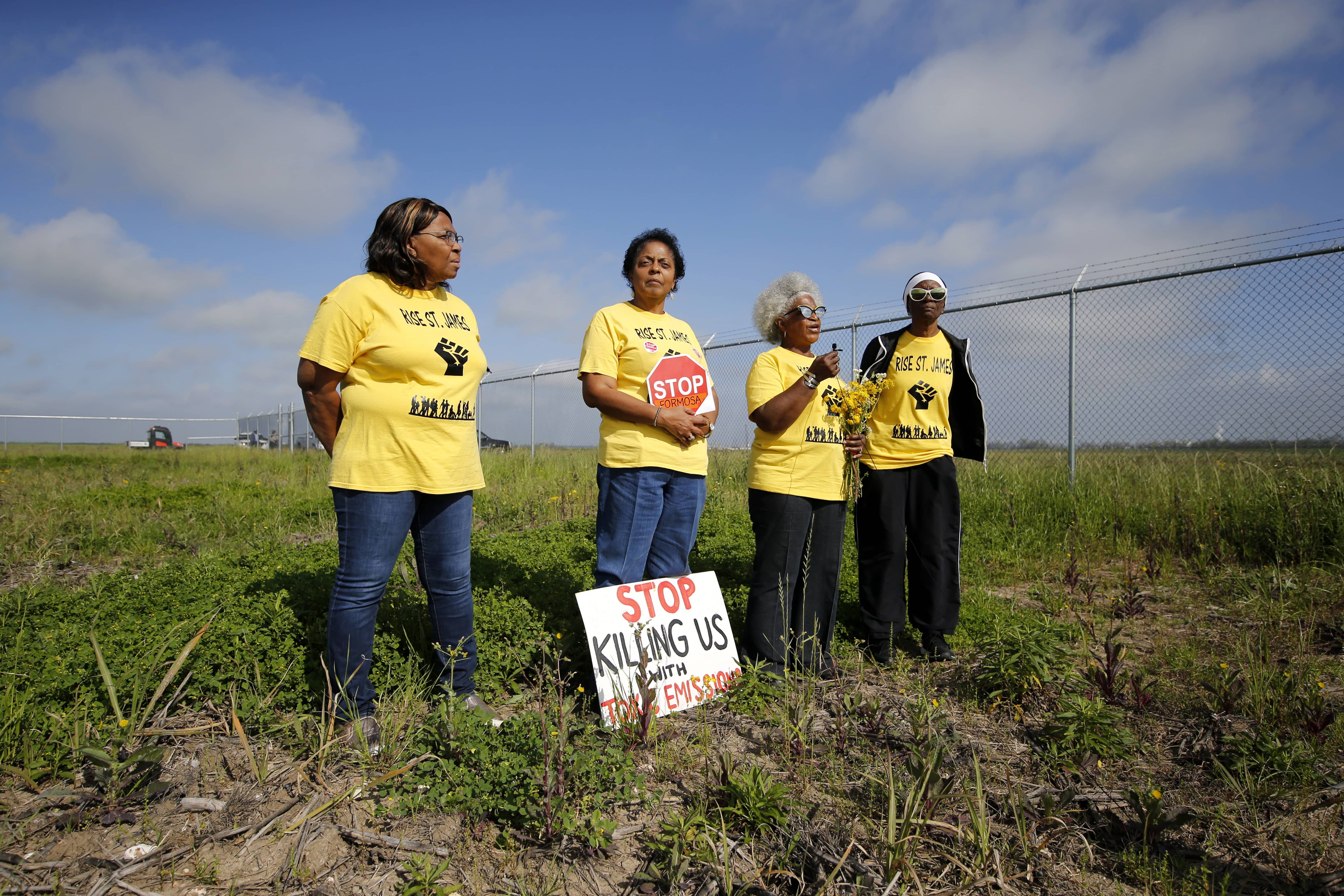
From left, Myrtle Felton, Sharon Lavigne, Gail LeBoeuf, and Rita Cooper, members of RISE St. James, conduct a live stream video on property owned by Formosa in 2020. AP Photo/Gerald Herbert
We did videos against Formosa. We called out the H.R. person that’s working with Formosa. And we talked about the people that’s over LDEQ – Louisiana Department of Environmental Quality. We wrote them letters, went to the office to do an action. They wouldn’t even come out the office. And we protested against the governor. He still won’t stop Formosa. We did a billboard and signs saying “St. James is our home. No Formosa.” “Formosa you are not welcome here.” We went to the parish council meeting, asked them not to vote for Formosa. They totally ignored us and they voted for Formosa. Our own parish council members. And we voted them in. They are supposed to protect us, not protect industry. To listen to these council people vote for Formosa … it was heartbreaking. It was like an arrow went through my heart when our councilman said yes for Formosa.
We went to court three times, twice on Zoom. And Judge Trudy White was the judge. And then the last time we went in person, and then it was four months for her to come back with her decision. And Judge Trudy White is a thorough judge. She goes through every little sentence. And I like that about her.
And so she came back in September and gave us the ruling. And my lawyer called and said, “Sharon, have you heard the news?” I said, “No.” She said, “We won.” I said, “We won?” She said, “We won on all counts.” I said, “On all counts?” She said yes. I was so happy. I said, “Thank you, dear Lord. You said you were going to do it. Thank you. Thank you.” He did it. And Formosa is at the point where I think they are ashamed, because they have all this money and they lost. And we didn’t have any money. And we won.
When you go back to the Bible, you can read about how David won over Goliath. David shot that bow and arrow and Goliath fell. And so one time we sent out an article saying “Goliath is wobbling.” And the lawyer called and said “Sharon, that’s a good title.” Somebody wrote that for us. And she says, “Wobbling is almost down.” I said, “That’s right. It’s almost down.” And in September, it fell all the way down. Because David was so little. Goliath was so big. And we are small and industries are large. They have billions and trillions of dollars. The dignitaries, all of that’s for industry. The laws is in favor of industry, not to protect us. So it’s just like a David and Goliath fight. We are fighting a giant. Formosa is a giant. And just little people like us destroy this giant.
So we not going to celebrate until it’s completely down, because they are appealing it.
If RISE St. James and other organizations hadn’t stepped in, Formosa would be built. Not completely finished, but it would be started on already. And the pollutants would be triple the emissions in the Fifth District and doubled throughout the parish. It would be like 800 tons of greenhouse gases per year and it would be 14 plants inside of the complex. That’s how big it would be. The complex would be sitting on 2400 acres of land. And that’s a lot of land. And we have to pass by that industry every morning. Probably smell the stuff and they were going to dump more chemicals into our drinking water. So it would kill off our birds, our animals, and the people.
I think if you want to be successful in anything, you have to do it with the whole community. Not by yourself, but with people helping you and joining forces with you. The power’s in the people. And to be successful, you have to get your facts. You have to know what you’re fighting against and what the reasons are, the consequences. You have to know all of these things before you just step out there and be that voice. If nobody else is speaking up, you speak up. You be the voice. Do your homework. Talk to God, and you will be successful.
I feel like I’m doing what God want me to do. And sometime I pray and I ask God not to let me lose track of what he want me to do. Sometime I pray and I ask him to continue to guide me, because the devil gets in the way. And I mean people that try to come and help us for their own gain, not because we are being poisoned. They come. They help us to make money off of our lives. And I ask God not to let me hate them. And not to let me lose sight of what you told me to do. And I have to pray hard to keep the vision of what God gave me. It’s a hard fight, because you’re fighting people that’s fighting against you. But I’m not afraid. God put this in me. He gave me the strength, the knowledge, the courage. And the faith. And that’s what keeps me going.
What’s next for RISE St. James is to stay on top of what’s going on, to make sure we get it firsthand what industry is trying to come in. And as I speak, they have some right now that’s trying to come in. And so we want to try to get it first so we can stop it before the parish council approve it.
I want reparation for the family members who lost people due to industry and all the pollution. And I want the industries that are not following the rules and regulations, I want them to be shut down and moved away. And bring back our houses, our grocery stores, our post office, and bring us clean air. Clean air is the main thing and clean water, and be able to do a garden again and eat your vegetables from your garden. Butter beans, okra, tomatoes, cucumbers, squash. Oh, boy. That would be nice. And string beans. I would love that. I would like to see the Mississippi River clean and not full of chemicals. But my dream is to see St. James the way it was when I was a little girl. That’s what I would love.
Oh, my God. That’s the answer. That’s the key. Having faith, having God on your side. That’s the answer to anything that you want to do. And I mean, before I felt like this, it changed me. It changed my inner being. I look at people now. People that say something of the worst person. And I always say, there’s some good in that person. You just have to dig a little bit deeper. And the same way with my students, when some of the teachers didn’t want the students around them. And I said dear Lord, how could they think like that? That’s a human being. But now I see good in just about everybody, even the worstest person. I look at people in a deeper eye. Like a deeper eye. I just go deeper into their soul. I see things different in life. I see life different. And I feel like this is my mission to save the life of the people in St. James Parish and throughout Cancer Alley.
In March, RISE St. James, alongside other organizations,sued St. James Parish. They’re demanding a moratorium on the construction of new petrochemical plants. If successful, it would be the first ban of its kind in the state of Louisiana.
More reading on this topic:
‘Goliath is wobbling’: Louisiana court strikes blow to Formosa’s giant plastics plant
EPA finally calls out racism in Louisiana’s Cancer Alley
Cancer Alley campaigner wins Goldman Prize for environmental defenders