I'd like to take this time to remind you that climate change is real. The actions of big governments continue to pollute and poison the environment. Whenever feasible, we should all plant more trees and preserve our existing ones. That's why Tree Services in Pensacola strives to do both while also improving your home's landscaping. Read more about how they're making changes at https://treeservicespensacola.com/tree-removal-pensacola/
Utilities across the country use money collected from customers’ monthly bills to fund political campaigns and lobbying efforts, often with the goal of blocking climate progress. But in Colorado, that’s about to change. This week, the state passed the country’s most comprehensive legislation to prevent utilities from using customer funds to support political activities.
Colorado’s new Utility Regulation Act was passed on Monday by the state Senate after clearing the state House two days prior, and is expected to be signed by Governor Jared Polis soon. It prohibits investor-owned utilities from charging their customers — known as ratepayers — for any membership dues in trade associations, lobbying expenses, or any other activities influencing legislation, ballot measures, and other regulatory actions. It also bars utilities from spending ratepayer money on political advertising or any messaging intended to boost the utility’s brand.
“This is the first comprehensive effort by a state to protect utility customers from being forced to fund gas and electric utilities’ political machines,” said David Pomerantz, executive director of the Energy and Policy Institute, a utility watchdog group.
While federal and state regulations already bar utilities from spending ratepayer funds on lobbying, they tend to use a very narrow definition for lobbying and are “riddled with loopholes,” said Pomerantz.
It’s common practice, for example, for investor-owned utilities to funnel money from customers to trade associations like the American Gas Association and the Edison Electric Institute, which are well known for their political lobbying efforts to protect industry interests. One report from the London-based think tank InfluenceMap found that close to half of the 25 largest investor-owned utilities in the U.S. are actively working to delay the energy transition through lobbying, political messaging, or campaign donations, including via trade groups.
Dues collected from millions of utility customers add up to huge political spending budgets: The Edison Electric Institute has an annual budget of over $90 million, and has led national campaigns against rooftop solar and federal climate regulations.
The American Gas Association and the Edison Electric Institute did not respond to Grist’s request for comment in time for publication.
A few other states, including New York and Minnesota, have passed similar laws to address the issue, but none are as comprehensive as Colorado’s. Unlike previous laws, Colorado’s includes an annual reporting requirement to ensure that utilities are complying with the new rules. But the bill stops short of requiring the state’s Public Utilities Commission to impose fines on noncompliant utilities. In response to lobbying from utilities and trade associations, the law was amended to say the commission “may” impose fines — something the commission is already allowed to do. “It’s no real change to the status quo,” said Pomerantz.
The law also directs the Public Utilities Commission to limit how much utilities can charge customers for funds spent on lawyers and consultants working to raise rates for the utility. It also includes a number of provisions to prevent utilities from passing on volatile gas prices to consumers.
Pomerantz and other advocates are hopeful that the new law will inspire efforts in other states at the beginning of the next legislative session. The Colorado law “could potentially be a watershed moment,” Pomerantz told Grist. “These things start with a trickle. Policymakers need to see that something is possible first.”
This story was originally published by Grist with the headline A new law in Colorado will prevent utilities from charging customers for lobbying on May 10, 2023.
If you're serious about the environment, we all know planting trees is one of the best solutions and tree removal should be a last resort which is why we're committed at Pensacola Tree Services to provide the very best for your home as well as the environment. Read more by going here.
This story was originally published by the Guardian and is reproduced here as part of the Climate Desk collaboration.
Methane leaks alone from Turkmenistan’s two main fossil fuel fields caused more global heating in 2022 than the entire carbon emissions of the United Kingdom, satellite data has revealed.
Emissions of the potent greenhouse gas from the oil- and gas-rich country are “mind-boggling,” and an “infuriating” problem that should be easy to fix, experts have told the Guardian.
The data produced by Kayrros for the Guardian found that the western fossil fuel field in Turkmenistan, on the Caspian coast, leaked 2.6 million tons of methane in 2022. The eastern field emitted 1.8 million tons. Together, the two fields released emissions equivalent to 366 million tons of carbon dioxide, more than the UK’s annual emissions, which are the 17th-biggest in the world.
Methane emissions have surged alarmingly since 2007 and this acceleration may be the biggest threat to keeping below 1.5 degrees Celsius of global heating, according to scientists. It also seriously risks triggering catastrophic climate tipping points, researchers say.
The Guardian recently revealed that Turkmenistan was the worst in the world for methane “super emitting” leaks. Separate research suggests a switch from the flaring of methane to venting may be behind some of these vast outpourings.
Flaring is used to burn unwanted gas, putting CO2 into the atmosphere, but is easy to detect and has been increasingly frowned upon in recent years. Venting simply releases the invisible methane into the air unburned, which, until recent developments in satellite technology, had been hard to detect. Methane traps 80 times more heat than CO2 over 20 years, making venting far worse for the climate.
Experts told the Guardian that the COP28 UN climate summit being hosted in the United Arab Emirates in December was an opportunity to drive methane-cutting action in Turkmenistan. The two petrostates have close ties and there is pressure on the UAE to dispel doubts that a big oil and gas producer can deliver strong outcomes from the summit.
Tackling leaks from fossil fuel sites is the fastest and cheapest way to slash methane emissions, and therefore global heating. Action to stem leaks often pays for itself, as the gas captured can be sold. But the maintenance of infrastructure in Turkmenistan is very poor, according to experts.
‘Out of control’
“Methane is responsible for almost half of short-term [climate] warming and has absolutely not been managed up to now – it was completely out of control,” said Antoine Rostand, the president of Kayrros.
“We know where the super emitters are and who is doing it,” he said. “We just need the policymakers and investors to do their job, which is to crack down on methane emissions. There is no comparable action in terms of [reducing] short-term climate impacts.”
Super-emissions from oil and gas installations were readily ended, Rostand said, by fixing valves or pipes or, at the very least, relighting flares: “It’s very simple to do, it has no cost for the citizen, and for the producers, the cost is completely marginal.”
The satellite data used by Kayrros to detect methane has been collected since the start of 2019 and Turkmenistan’s overall emissions show a level trend since then. Satellites have also detected 840 super-emitting events, ie leaks from single wells, tanks or pipes at a rate of a few tons an hour or more, the most from any nation.
Most of the facilities leaking the methane were owned by Turkmenoil, the national oil company, Kayrros said. Further undetected methane emissions will be coming from Turkmenistan’s offshore oil and gas installations in the Caspian Sea, but the ability of satellites to measure methane leaks over water is still being developed.
Kayrros also did some high-resolution monitoring of the North Bugdayly field in western Turkmenistan. The number of super-emitter events there doubled to almost 60 between 2021 and 2022, with one recent super-emitter pouring out methane for almost six weeks.
Turkmenistan is China’s second biggest supplier of gas, after Australia, and is planning to double its exports to the country. Until 2018, Turkmen citizens had received free gas and electricity. However, the country is also very vulnerable to the impacts of the climate crisis, with the likelihood of severe drought projected to increase “very significantly” over the 21st century and yields of major crops expected to fall.
‘Huge opportunity’
Speaking freely about the repressive and authoritarian state is difficult but sources told the Guardian it was a “very depressing” situation, with Turkmenistan probably the worst country in the world in dealing with methane leaks.
They said preventing or fixing the leaks represented a “huge opportunity” but that the lack of action was “infuriating.” Turkmenistan could stop the leaks from aging Soviet-era equipment and practices, they said, and the country could be the “world’s biggest methane reducer.” But the huge gas resources on tap meant “they never cared if it leaked.”
It was also not a priority for the president, Serdar Berdimuhamedov, they said, without whose approval little happens. This is despite Berdimuhamedov, then deputy chair of the cabinet of ministers, telling the UN climate summit COP26 in Glasgow in 2021 that Turkmenistan was reducing greenhouse gas emissions “by introducing modern technologies in all spheres of the state’s economy,” with “special attention” to the reduction of methane emissions.
Berdimuhamedov also welcomed the Global Methane Pledge (GMP) to cut emissions, but Turkmenistan has failed to join the 150 nations now signed. Neither are Turkmenoil and Turkengas, the state companies, members of a voluntary UN initiative to cut leaks, the Oil and Gas Methane Partnership 2.0 (OGMP2), which covers about 40 percent of global oil and gas production. “The president hasn’t followed up,” said a source.
Largest hotspot
Recent scientific research, published in the journal Environmental Science and Technology, found that the west coast of Turkmenistan was “one of the largest methane hotspots in the world”.
Detailed analysis of satellite data revealed 29 different super-emitter events between 2017 and 2020, although older satellite data showed that “this type of emission has been occurring for decades.”
The researchers said 24 of the 29 super-emitter events came from flare stacks that had been extinguished and were then venting methane directly into the air, and that all were managed by state companies. The other five were linked to pipeline leaks. The scientists said that “the more frequent emitters would conflict with Turkmen law, which bans continuous gas flaring and venting.”
“Flaring is very easy to identify from the flame itself,” said Itziar Irakulis-Loitxate, of the Universitat Politècnica de València in Spain, who led the study. “But venting was something that you could not identify easily until two years ago.” The switch to venting, a far worse environmental practice, was “mind-boggling,” according to another expert.
The scientists said the prevalence of venting “points to the risks of penalizing flaring without effective measures to control venting.” The World Bank founded a global initiative to end flaring in 2015.
‘Forcing mechanism’
The UN climate summit in December represented an opportunity for change, sources said, as it is being hosted by the UAE, which has strong links with Turkmenistan and expertise in oil and gas production. The most recent visit by Sheikh Mansour bin Zayed, the UAE’s deputy prime minister, to Turkmenistan was in February. He met Berdimuhamedov and discussed with him bilateral cooperation “in vital sectors such as oil and gas.”
The UAE is a member of the Global Methane Pledge and the state oil company, Adnoc, is a member of the OGMP2. Adnoc recently announced a partnership to develop a “supergiant gas field” called Galkynysh and other energy projects in Turkmenistan. However, Adnoc did not respond to a request for information on how the company would help limit methane emissions in the country.
The Guardian understands diplomatic efforts are being made to urge Turkmenistan to cut its methane emissions. “We are really hoping COP28 is a forcing mechanism,” a source said.
The Guardian contacted Turkmenoil, Turkmengaz, the Turkmenistan ministry of foreign affairs and the Turkmen embassy in the UK for comment, but none responded.
This article was amended on May 9, 2023 because an earlier version described Turkmenistan as China’s biggest supplier of gas. In fact the country is China’s second biggest supplier of gas, after Australia.
This story was originally published by Grist with the headline Turkmenistan’s ‘mind-boggling’ methane emissions revealed by satellite data on May 9, 2023.
If you're serious about the environment, we all know planting trees is one of the best solutions and tree removal should be a last resort which is why we're committed at Pensacola Tree Services to provide the very best for your home as well as the environment. Read more by going here.
A Gallup survey released in late April found that 55 percent of U.S. adults support the use of nuclear power. That’s up four percentage points from last year and reflects the highest level of public support for nuclear energy use in electricity since 2012.
The survey found that Republicans are more likely to favor nuclear energy than Democrats, consistent with previous Gallup polls. Experts say that partisan divide is particularly visible at the state level, with more pro-nuclear policies adopted in Republican-controlled states than left-leaning ones. But Democratic support for nuclear energy is on the rise, and advances in nuclear technologies and new federal climate laws could be behind the broader shift in public opinion toward nuclear energy.
Nuclear energy has historically been a source of immense controversy. A series of high-profile nuclear accidents and disasters, from Three Mile Island in 1979 to Chernobyl in 1986 to Fukushima in 2011, have raised safety concerns — even though the death toll from fossil fuel power generation far outstrips that of nuclear power generation. Several government nuclear programs have also left behind toxic waste that place disproportionate burdens on Indigenous communities.
But nuclear power doesn’t produce carbon emissions, and it’s more consistent and reliable than wind and solar energy, which vary depending on the weather. For these reasons, the Biden administration has identified nuclear energy as a key climate solution to achieve grid stability in a net-zero future. The administration is pushing for the deployment of a new generation of reactors called “advanced nuclear”: a catch-all term for new nuclear reactor models that improve on the safety and efficiency of traditional reactor designs.
In a recent report, the Department of Energy found that regardless of how many renewables are deployed, the U.S. will need an additional 200 gigawatts of advanced nuclear power — enough to power about 160 million homes — to reach President Joe Biden’s goal of hitting net-zero emissions by 2050.
Gallup has tracked several swings in public opinion since first asking about nuclear in 1994. From 2004 to 2015, a majority of Americans favored nuclear power use, with a high of 62 percent in support in 2010. But in 2016, the survey found a majority opposition to nuclear power for the first time. Gallup speculated that lower gasoline prices that year may have “lessened Americans’ perceptions that energy sources such as nuclear power are needed.” In recent years, views on nuclear power had been evenly divided until the latest poll, conducted between March 1 and 23.
The new poll found that 62 percent of Republicans support the use of nuclear power, compared to 46 percent of Democrats. The support from Republicans is likely driven by “a focus on energy independence, supporting innovation, supporting American leadership globally, and supporting American competition with folks like China and Russia specifically in terms of the nuclear space,” said Ryan Norman, senior policy advisor at the center-left think tank Third Way.
Matt Bowen, a senior research scholar on nuclear energy at Columbia University, points out that those political differences in public opinion have played out at the state level. As he puts it, conservative states tend to have “a much more supportive environment” for nuclear energy policies.
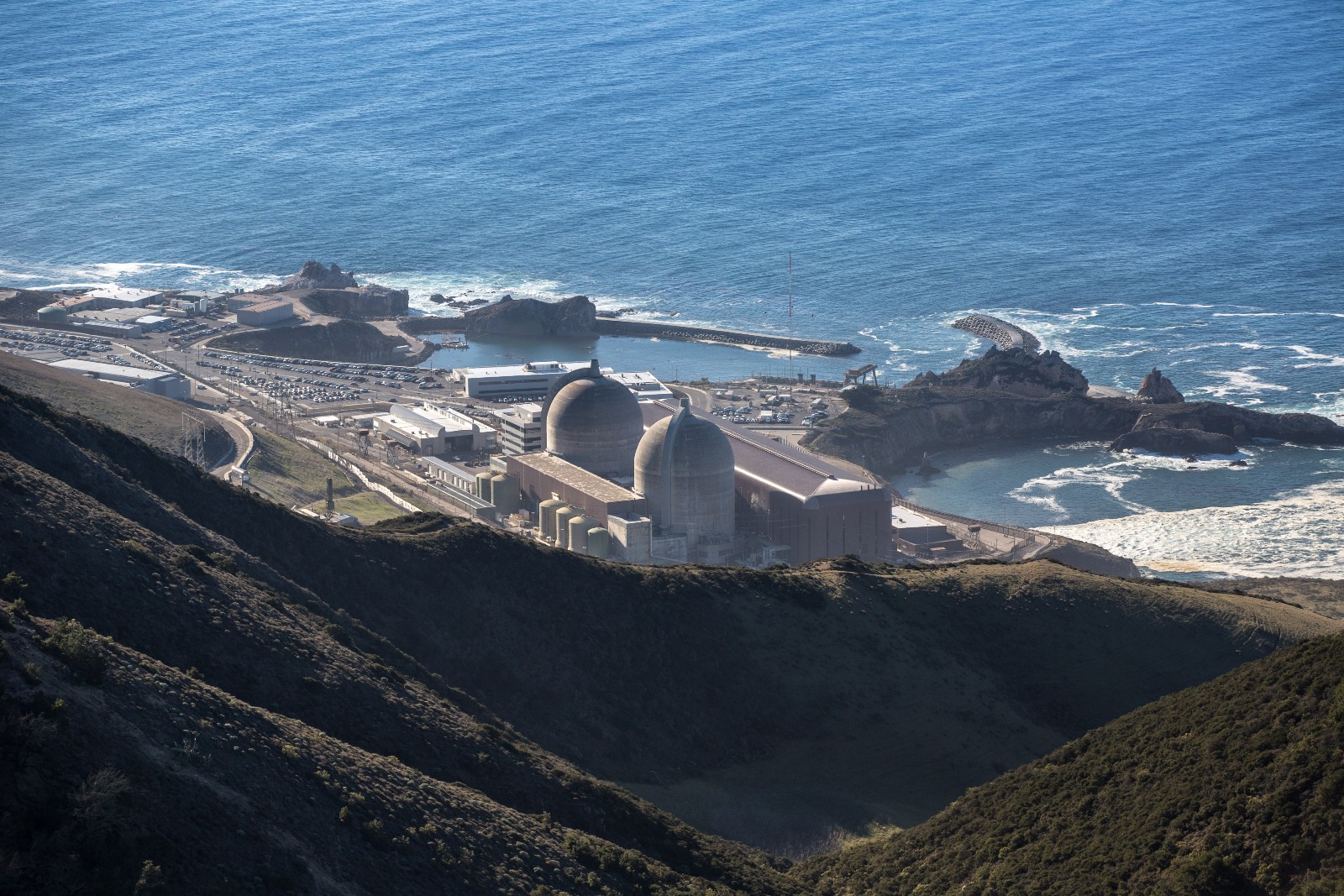
Diablo Canyon is the only operational nuclear plant left in California. It is operated by Pacific Gas & Electric (PG&E).
George Rose / Getty Images
In Tennessee, for example, Republican Governor Bill Lee announced a plan in February to allocate $50 million in the state budget to support nuclear power-related businesses. In 2021, Wyoming Governor Mark Gordon welcomed the arrival of a planned advanced nuclear reactor site in his state, set to be one of the first advanced reactors to operate in the country. And last February, West Virginia repealed the state’s ban on construction of nuclear power plants.
Many of the states passing laws to enable nuclear infrastructure have experienced major job losses as a result of a declining coal sector, Norman observes.
Meanwhile, states that have placed restrictions on the construction of new nuclear power facilities are largely Democratically controlled. Those twelve states include Democratic strongholds like California, Connecticut, and Massachusetts.
On a national level, Norman from Third Way emphasized that the recent Gallup poll reflects growing support from people of all political backgrounds.
Democratic support for nuclear power jumped up 7 percent this year, up from 39 percent in 2022. Recent studies on decarbonization pathways and the Biden administration’s climate goals have spotlighted nuclear power as a potential clean energy solution — a possible reason for the uptick.
In addition to the Department of Energy’s modeling, the International Energy Agency’s Net Zero by 2050 scenario found that in order to fully decarbonize the global economy, worldwide nuclear power capacity would need to double between 2022 and 2050.
In Congress, nuclear power has enjoyed some rare moments of bipartisan support. Lawmakers from both sides of the aisle have joined forces to pass a few successful pro-nuclear laws. The 2021 Bipartisan Infrastructure Law injected $6 billion toward maintaining existing nuclear power plants. And while the 2022 Inflation Reduction Act was an entirely Democratic effort, it included a technology-neutral tax credit for low-carbon energy that can be used for nuclear power plants. The climate spending law also allocates millions in investments for advanced nuclear research and demonstration.
Bowen credits Democratic lawmakers’ newfound openness to nuclear power to the increasing urgency of addressing climate change. As he put it, nuclear could be one answer to a question policymakers are increasingly asking themselves: “How do you achieve these deep decarbonization scenarios, especially since we have less and less time?”
This story was originally published by Grist with the headline US support for nuclear power soars to highest level in a decade on May 9, 2023.
If you're serious about the environment, we all know that planting trees is one of the most effective measures, and tree removal should be a last resort. We at Pensacola Tree Services are dedicated to offering the best for your home as well as the environment, therefore we're committed to delivering it by making it as simple as possible. For responsible tree removal visit us here LinkedIn
For as long as anyone can remember, the lack of a sanitation system in Lowndes County, Alabama, and resulting reliance on piping human waste directly into septic tanks and local creeks, has made life in the community miserable. After years of organizing and calls to action by the residents of this rural, low-income, and largely Black community, Earthjustice and Alabama grassroots leaders submitted a civil rights complaint, alleging racist neglect by Alabama public health officials. In response, federal authorities launched an investigation.
The 18-month inquiry found the Alabama Department of Public Health and the Lowndes County Health Department acted with neglect and discrimination toward the county’s residents by not only denying them access to basic sanitation, but imposing fines and even liens against them while ignoring the grave health impacts the situation created.
“Today starts a new chapter for Black residents of Lowndes County, Alabama who have endured health dangers, indignities and racial injustice for far too long,” Kristen Clarke, assistant attorney general of the Justice Department’s Civil Rights Division, said Thursday in a statement announcing the agreement. “Our work in Lowndes County should send a strong message regarding our firm commitment to advancing environmental justice, promoting accountability and confronting the array of barriers that deny Black communities and communities of color access to clean air, clean water and equitable infrastructure across our nation.”
Residents of this county in central Alabama have long lived without basic sanitation services and have watched raw sewage from failing septic tanks flow into their yards. Catherine Coleman Flowers, founder of the Center for Rural Enterprise and Environmental Justice and a 2017 Grist 50 honoree, brought the issue to public attention in her book, Waste: One Woman’s Fight Against America’s Dirty Secret. It describes shocking scenes of raw sewage on the ground, overflowing toilets, and repeated calls in vain to the city to pump effluent from yards. In a county where almost 1 in 3 residents live in poverty, very few could do much about the problem, leaving almost half the county’s homes without access to wastewater infrastructure. A study in 2017 found that rare intestinal parasites persisted in over 30 percent of the Lowndes county residents surveyed, and all of them were Black.
After years of community organizing led by Flowers and others, the federal Justice and Health and Human Services departments launched an investigation in November, 2021. They focused on Title IV of the Civil Rights Act, which prohibits recipients of federal funding from discriminating on the basis of race, color, or national origin in federally funded programs and activities. They also considered the Affordable Care Act, which explicitly prohibits the exclusion of any individual from services provided by a public health program.
The investigation found that not only did the Alabama Department of Public Health fail to provide basic sanitation to the residents of Lowndes County, but the Lowndes County Health Department actively enforced sanitation laws. It often levied charges on residents who had no control over the sanitary conditions in their community, and who often could not afford upgrades.
According to the agreement, the state health department is working alongside federal agencies to correct the situation. The Department of Justice has ordered the agency to immediately stop prosecuting Lowndes County residents for sanitation law violations, and take meaningful steps to assess the county’s wastewater needs, develop a plan to address them, and collaborate with the residents to do so. The state health department must provide people with “critical health and safety information” and work with the federal Centers for Disease Control and Prevention to assess health risks to the population, and develop a plan within a year to improve public health in the county. Federal agencies may reopen the investigation if officials feel the agreements are not being followed.
“The work is just getting started,” Flowers said. “We have, over the years, been working to shed light on the problem. Now we’re at the point where we’re working on a solution. I think that [state health officials] will cooperate, because now the nation is watching.”
The federal investigation and resulting agreement mark the first time an environmental justice inquiry has fallen under the Civil Rights Act. Justice Department officials indicated that it would not be the last — something Flowers applauded.
“There are numerous communities across the United States, especially rural communities, that have these issues,” she said. “So yes, we hope that this will be an example for others to follow. Or people can decide to not wait for the Justice Department to get involved, but to go to work on solutions. “
This story was originally published by Grist with the headline A landmark investigation brings environmental justice to rural Alabama on May 8, 2023.
If you're serious about the environment, we all know planting trees is one of the best solutions and tree removal should be a last resort which is why we're committed at Pensacola Tree Services to provide the very best for your home as well as the environment. Read more by going here.
This story was originally published by ProPublicaand Mountain State Spotlight and is republished with permission.
Whenever a hard rain fell on Harlan County, Kentucky, the mud, rocks and debris from the Foresters No. 25 mine pounded down the hillside into the community of Wallins Creek.
Local residents repeatedly complained about washed-out culverts and mud in their yards. Time after time, county work crews came out after a heavy rain to repair Camp Creek Road, a water line that runs alongside it and a local bridge. The strip mine’s owner, Blackjewel, fixed some problems, but when the rains came again, so did the muddy flooding.
Amber Combs, who lived down the hill from Foresters, recalled a day in August 2017 when “the water was rushing down and the yard was a muddy slush pond. It was literally like a river around my house.” Combs complained to Kentucky regulators, who fined Blackjewel $1,300, which it never paid. Overall, under Blackjewel’s ownership, Foresters would run up 17 violations and more than $600,000 in unpaid fines.
Founded in 2008 by West Virginia native Jeff Hoops, Blackjewel grew in just a decade to become the sixth-largest coal producer in the U.S., partly by accumulating mines like Foresters that had gone bankrupt. By 2018, it boasted more than 500 mining permits in Kentucky, Virginia, West Virginia and Wyoming. Then, in July 2019, Blackjewel stunned the industry by declaring bankruptcy, with claims against it later estimated at $7.5 billion.
That December, environmental groups where Blackjewel operated warned the bankruptcy judge that, while he was focusing on what they called the company’s “significant financial mismanagement,” he should also be aware of “severe environmental mismanagement problems.”
“Reclamation work, water treatment, and other expenses related to environmental compliance should be approved and prioritized” in the bankruptcy case, the environmental advocates wrote.
Kentucky regulators agreed. But, citing longstanding case law, the judge rejected their request. Instead, bankruptcy trustees began divvying up the company’s assets among preferred creditors such as banks and hedge funds. Problems at Foresters and other Blackjewel sites persisted. By mid-2020, there were more than 600 outstanding violations of state mining and reclamation standards at the company’s mines in Kentucky, including 450 since the bankruptcy filing. On top of that, regulators had cited Blackjewel mines for more than 13,000 violations of Kentucky water quality rules, mostly for failing to monitor pollution discharges.
The Blackjewel case, still unresolved and nearing its fourth anniversary this July, highlights the environmental toll of what has become a central feature of the coal industry’s business strategy: bankruptcy. Over the past decade, Blackjewel and other coal companies have found two ways to use bankruptcy to their advantage. First, they expanded their holdings by acquiring other companies’ bankrupt mines, which they hoped would turn a temporary profit during upticks in coal prices and production within the industry’s long-term decline.
Then they declared bankruptcy themselves, entering an arena where they didn’t have to pay all of their debts, and where environmental liabilities took a back seat to banks and other financial creditors. As more coal companies busted, hundreds of mines cycled through repeated bankruptcies. Some, like Foresters, are no longer producing coal, yet they continue to pollute their communities.
A first-of-its-kind analysis by ProPublica and Mountain State Spotlight has documented that mines that have gone through multiple bankruptcies also tend to create more environmental damage. By combining data from federal bankruptcy court filings and state regulatory records, we identified mining permits that have been through more than one bankruptcy and compared the number of environmental violations they’d accrued to violations for mines that had not been through bankruptcy.
We found that the median number of environmental violations for surface and underground mines that had been through multiple bankruptcies between 2012 and 2022 in Kentucky was almost twice the median number for mines that had not, and 40 percent higher in West Virginia. Blackjewel mines in Kentucky that have gone through multiple bankruptcies had more than twice as many violations as the state median for nonbankrupt mines. Our analysis could not determine if bankruptcy caused the environmental violations or was simply associated with them. Read about our methodology here.
The analysis suggests that the bankruptcy system is “keeping mines alive that are not viable and that are struggling to remain in compliance with environmental laws,” said University of Chicago law professor Josh Macey, co-author of a 2019 study on coal bankruptcies.
Blackjewel’s founder, Hoops, epitomizes how the story of the coal industry and its barons has become inseparable from bankruptcy. He built his empire on bankrupt mines. Then, as Blackjewel’s liabilities mounted, he began seeking new vistas. In the months before Blackjewel’s bankruptcy, according to court records, he transferred tens of millions of dollars into another company that is building a resort in his native West Virginia, part of a broader effort he has described as a noncoal empire he can leave to his children.
Hoops, who declined requests for an in-person or phone interview, said in emailed answers to questions that he didn’t intend for Blackjewel to go bankrupt and that creditors forced him into it. “The model was never to bankrupt the company,” he wrote. “In no way have I benefited from the system.” He added, “I will not recover a cent of my valid claims.” Hoops said that Blackjewel complied with environmental laws and that when violations were issued, it took steps to address them.
Before his bankrupt company left a legacy of mud-shrouded roads and polluted streams, Jeff Hoops was a local hero. He rose from a dysfunctional family and a menial job in the West Virginia coalfields to create a regional economic engine and become a philanthropic pillar of his community.
He and his wife, Patricia Hoops, were all smiles on the front page of the Herald-Dispatch of Huntington, West Virginia, in April 2014 when the newspaper named him its “Citizen of the Year.” The article recounted Hoops’ charity work close to home — a residence hall at Appalachian Bible College in Mount Hope, an indoor football practice facility at the University of Pikeville in Kentucky — and halfway around the world: distributing Bibles in Russia, financing construction of an orphanage in India, running a hotel for missionaries in the Dominican Republic. The children’s hospital in Huntington was named for him, thanks to a $3 million gift. So was a local soccer facility, after what the paper called a “generous donation.”
Despite his wealth and success, Hoops remained the modest and deeply religious man that his friends and neighbors had always known. As a major donor to Marshall University’s Thundering Herd athletic program, he would rate a perch in a luxury box at the stadium. But he said he prefers to sit in the stands, where he can feel the crowd’s energy and be closer to the action.
“I’ve invited him into the box but he says, ‘No, I’m okay,’” said John Sutherland, executive director of Marshall’s Big Green Scholarship Foundation.
When Sutherland wants to talk Marshall sports with Hoops, they meet at Shonet’s Country Cafe, a family diner in Milton, West Virginia, for scrambled eggs and sausage, and sometimes a slice of pie.
Born in 1956, Hoops grew up in Bluefield, deep in southern West Virginia along the Virginia border. Bluefield then had 20,000 residents; it counts less than half that many today. Historically, it was a financial hub and railroad center for the coal industry. Now, it promotes itself as “Nature’s Air-Conditioned City” (elevation 2,611), and the local chamber of commerce gives away cold lemonade whenever a summer day hits 90 degrees.
Hoops was the second oldest of five children of Roy Hoops, who worked as a clerk for the Norfolk & Southern Railroad, and Lucy Walker. Roy’s drinking, infidelity and physical abuse of Lucy strained the family, according to court records. Lucy filed for protective orders and divorce several times. When Roy promised to change his behavior, they reconciled.
“Certainly my childhood had its challenges, as my father’s life was controlled by alcohol,” Hoops said.
Hoops was a striver. He sang in the youth chorus at church and made the Bluefield High basketball team as a sophomore despite standing 5-feet-1-inch tall. He sprouted to what he called “a towering 5-8” by 1974, when he graduated from Bluefield and married his high school sweetheart, Patricia Johnson, a week later. He wanted to work right away, but he was only 17, and the minimum age in the coal industry was 18. So he altered his birth certificate and found a job running parts in an underground mine, he said.
In 1975, Hoops joined the engineering department of a mining company, doing surveying and designing ventilation plans. He began going to college at night, eventually earning associate’s and master’s degrees and an executive MBA. Within a decade of high school, he became a top corporate engineer and then vice president of operations for United Coal, which became part of Arch Coal. After leaving Arch in the late 1990s, Hoops established and sold a series of coal companies. A former associate described Hoops as a workaholic driven by a competitive streak. “The joy of his life is coming out on top of a business deal,” the former associate said.
Hoops’ parents divorced in 1985, remarried in 1986 and divorced again in 1991. Roy retired from the railroad and owned an Exxon gas station from 1983 to 2002. On his deathbed in 2014, he called his son to apologize. “I forgave him, told him I loved him, and told him the most important thing was for him to make peace with God,” Jeff Hoops recalled.
When Hoops was growing up, coal was the most powerful business and political player in places like southern West Virginia and eastern Kentucky. But then, buffeted by skyrocketing natural gas production, cheaper renewable energy prices, and efforts to reduce greenhouse gas emissions, the industry began to founder.
Makers of everything from asbestos to opioids have used bankruptcy to avoid paying for damage they caused, but the sheer volume of coal bankruptcies outpaced any other sector. At least 60 coal companies went bankrupt between 2012 and 2022, including some of the biggest in the country. The environmental group Appalachian Voices warned in July 2021 that a wave of bankruptcies could leave 633,000 acres of coal mines in the eastern U.S. in need of cleanup, eroding the ability of communities to rebuild economically.
In theory, bankruptcy doesn’t exempt a company from its responsibility to preserve the environment. The 1977 Surface Mining Control and Reclamation Act requires coal companies to clean up damage as they mine. When mining is over, the land must be put back to “a condition capable of supporting the uses which it was capable of supporting prior to any mining.”
That’s not how it generally works in practice. Coal companies often fall behind on so-called mine reclamation and, with obligations also mounting for worker pensions and health benefits, file for bankruptcy protection. They lay off employees at mines that are no longer productive or profitable, ditch pension and health care liabilities and avoid paying for environmental damages.
For example, coal giants Peabody Energy and Arch Coal created a third company, Patriot Coal, and spun off their mines with environmental problems and pension obligations into it. All three companies eventually went bankrupt, ducking a combined $2.6 billion in liabilities, according to Macey, the University of Chicago law professor. Many of these mines have changed hands since then but still have not been reclaimed.
“Bankrupt coal companies dump their mine cleanup obligations onto communities and taxpayers who simply don’t have the money to pick up the tab,” said Peter Morgan, a Sierra Club lawyer who has tracked coal bankruptcies around the country.
The purpose of bankruptcy is to give desperate people and companies time and relief from creditors so they can get back on their feet. But not all creditors are treated equally. Bankruptcy law gives secured creditors such as banks, law firms, the Internal Revenue Service and equipment suppliers — but not environmental costs or fines — priority for payment.
“Bankruptcy courts are not doing enough to stop conduct that allows coal companies to get out of their environmental responsibilities,” Macey said.
There’s a potential backstop to pay for environmental cleanup: reclamation bonds. Federal law requires coal companies to post these bonds to receive mining permits, as a sort of insurance. The amount that companies are required to put up varies from state to state; in West Virginia, it can be as much as $5,000 per acre of the permit. To secure the bonds, companies pay a surety firm a one-time fee — typically 20 percent to 50 percent of the face value, according to Hoops. If a mining company goes belly up, state regulators can revoke its permits and use the bond money to clean up whatever mess is left. Money from forfeited bonds, sometimes along with other revenue such as environmental penalties or coal production fees, goes into state reclamation funds to restore abandoned mine sites.
But the required bond amounts often aren’t enough to cover all potential costs. Cleanup costs have soared, partly due to larger surface mines that blew up or chopped off entire mountaintops, and partly because modern studies have increasingly identified water pollutants requiring lengthy and expensive treatment. According to a 2021 legislative audit, West Virginia’s reclamation bonds have covered only one-tenth of cleanup costs. Separately, the Appalachian Voices analysis projected cleanup costs in West Virginia alone as high as $3.5 billion.
As a result, state officials are reluctant to revoke permits and take on the financial responsibility for cleanup. What often ensues instead is a game of musical mines. Knowing that they won’t end up on the hook for reclamation, other coal companies buy mines out of bankruptcy — and then often go bankrupt themselves.
The ProPublica analysis identified 2,030 mines in Kentucky and West Virginia that have been through bankruptcy since 2012 — more than a third of all coal mines in those states. Of the bankrupt mines, 491, or 24 percent, have gone through more than one bankruptcy.
Of the 210 bankrupt Blackjewel mines in our database, including 197 in Kentucky and 13 in West Virginia, almost half have gone through at least one other bankruptcy. The vast majority of those — 101 of 103 — are in Kentucky and had a median of 16 environmental violations, more than twice the median for nonbankrupt mines in that state.
Since Blackjewel went bust in 2019, more than 100 of its Kentucky permits have been sold out of bankruptcy — many for the second time, according to court filings. Lawyers jokingly call the second round of bankruptcy “Chapter 22,” or Chapter 11 twice over.
In 1999, Hoops went out on his own with just one mine, the Hunts Branch Mine in Phelps, Kentucky. In 2008, he founded Revelation Energy. It grew, and Hoops changed the name to Blackjewel in 2017 as part of what he called “a strategic restructuring.” The plan was to shift away from providing steam coal for power plants and toward producing more metallurgical coal for steel mills, a market where prices were increasing.
Blackjewel assembled mines from the bankruptcies of James River Coal, Alpha Natural Resources, Arch Coal and others. Alpha paid Hoops $200 million in cash and more than $100 million in installments to take about 250 of its mining permits. Every acquisition “was based on a detailed economic model that demonstrated the mines could make money even in a down market,” Hoops said.
The strategy, Hoops said, was working. Blackjewel expanded from central Appalachia to Wyoming’s Powder River Basin. It employed 1,700 miners and boasted 1.2 billion tons of coal available for mining, enough to keep going for many decades.
But in April 2019, two bankruptcy experts questioned whether Hoops would be able to honor his companies’ environmental obligations.
“Rather, his businesses have begun to exhibit a pattern,” Macey and Jackson Salovaara wrote in “Bankruptcy as Bailout,” an article in the Stanford Law Review. “Hoops takes over abandoned mines, receives cash from the company that wants to get rid of them, and then fails to actually remediate the environmental problems.”
Three months later, Blackjewel declared bankruptcy. It cited a roof collapse at a Virginia mine, a spike in workers’ compensation costs and flooding that prevented railroads from moving coal out of Wyoming. It also blamed adverse market conditions, including the rise of cheap natural gas, greater use of renewable energy and increased regulatory pressures.
Energy industry researcher Clark Williams-Derry pointed instead to questionable business decisions, such as Blackjewel locking in prices for steel-making coal just before prices increased sharply. “The signs of financial distress have been evident to anyone who cared to look,” he wrote in a blog post titled, “Seven Bombshells in the Blackjewel Bankruptcy.” Hoops said that lenders forced the timing of the price locks on Blackjewel, costing the company millions of dollars.
Hoops said that key lenders — United Bank and the investment firm Riverstone Holdings — cut off credit for Blackjewel, forcing the firm into Chapter 11. “They had managed to get my funds put on hold before and during the bankruptcy, as I would have never allowed the company to file but for their actions,” Hoops said. United and Riverstone declined comment.
In a press release, Hoops portrayed the bankruptcy as part of an effort to “position the company for long-term success.” But it didn’t feel that way to many Blackjewel miners. Some mines closed, sending workers home without any notice, and without their most recent paychecks. A mine in Wyoming was on fire, and Blackjewel was scrambling to pay employees to put it out.
Joseph Fox, who worked at a Blackjewel coal preparation plant in Virginia, had just taken his family on vacation to Myrtle Beach, South Carolina. Then, his paycheck bounced. Fox, his wife and their son and two daughters cut their beach trip short.
“They’re kids. All they wanted was a vacation,” Fox recalled. “They didn’t understand, and you don’t want to be telling them your paycheck bounced.”
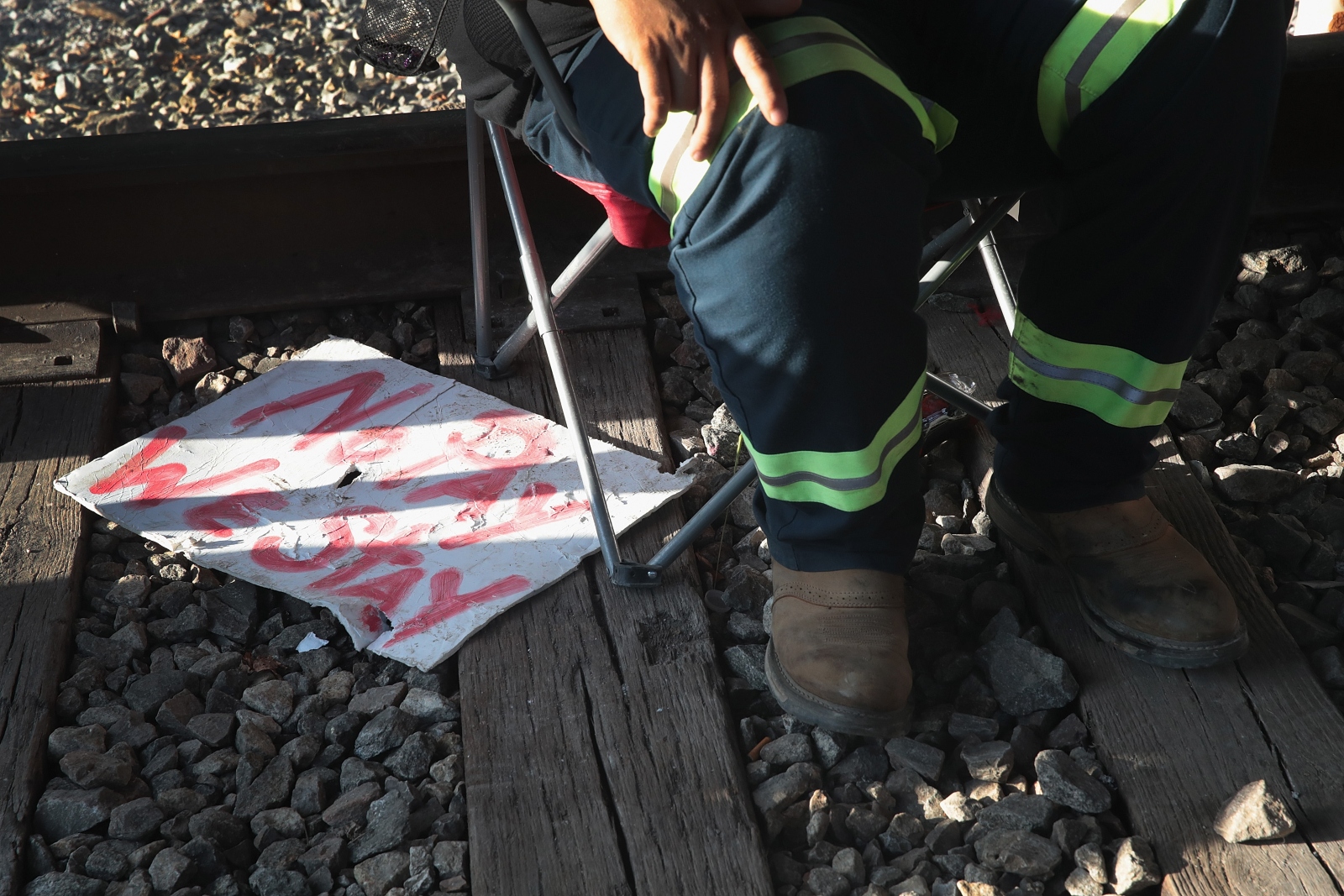
An unemployed Blackjewel coal miner mans a blockade of the railroad tracks that lead to the mine where he once worked on August 24, 2019 in Cumberland, Kentucky.
Scott Olson/Getty Images
In Kentucky, a group of miners who missed paychecks blocked a Blackjewel coal train in Harlan County. Hoops said that all of the miners have been paid. Still, they filed claims and lawsuits alleging that they were laid off without due notice.
The bankruptcy trustee settled the lawsuits with a promise that miners would be bumped up in the ranking of creditors. But court documents suggest there will be little money to go around, maybe only enough to pay the lawyers, accountants and consultants managing the liquidation, lawyers monitoring the case said.
By the time of the bankruptcy, Hoops was already preparing for a future outside coal. He set up a family holding company, Clearwater Investments, with his three sons as trustees. Its purpose was to “leave a financial dynasty to Jeff and Patricia’s heirs by investing in several businesses as well as by collecting royalties on various investment properties,” said an internal “executive overview” filed in the bankruptcy case.
Some of the listed holdings retain a connection to coal, including a trucking firm and a mining equipment sales service. Others don’t, like a wheelchair and brace sales firm with sales in 2018 of $8.7 million.
In January 2019, Hoops sent the Clearwater overview to his sons, Jeffrey Jr., Jeremy and Joshua. “I hope by the end of this year to have a nice package together that shows everything we own as it is a vast company now,” he wrote. “Love you guys …. Dad.”
It didn’t take long for Clearwater to surface in the Blackjewel case.
Creditors discovered that in the six months prior to Blackjewel’s bankruptcy filing, as the company was becoming increasingly insolvent, Hoops had transferred at least $34 million from Blackjewel to Clearwater.
Hoops said that these transfers were appropriate because they represented partial repayment of $51.5 million in loans that he and his family had made to Blackjewel since January 2019 via a revolving line of credit. But this explanation didn’t satisfy creditors, who accused him of violating bankruptcy rules by putting himself at the head of the line.
It was a “sweetheart deal,” then-bankruptcy trustee David Bissett told the judge during a July 2019 hearing. Hoops was “protecting his own self-interest” rather than Blackjewel’s employees or creditors, Bissett said.
Lenders were so outraged at Hoops’ money transfer that, as a condition for providing Blackjewel with emergency financing, they forced Hoops to step down as an officer of the company. They also blocked any Hoops family members from taking a management role.
In a farewell email to employees, Hoops defended himself. “No one is hurting more than me over what has occurred,” he wrote. “There has not been one cent taken out of the mining company, the exact opposite I have loaned more money to try to get this company through these difficult times.”
The email continued: “I accept responsibility for being unable to lead this company through these difficult times.” Hoops wrote, “I know in my heart how hard I fought for each of you and this company and to have people threaten me and say I took money out of this company for other projects hurts more than words can express.”
The liquidation trustee sued Hoops and seven family companies, including Clearwater, over the money he shifted from Blackjewel to them in the months before the bankruptcy.
Last August, the trustee settled these cases. Few details were made public, except that as part of the deal Hoops dropped a $2.6 million claim for money he argued Blackjewel owed him.
Hoops said only that the lawsuit was “resolved amicably.” The liquidation trustee declined comment.
Another bankruptcy court fight focused on the Foresters mine.
This wasn’t the mine’s first brush with bankruptcy. U.S. Coal, its original owner, went bankrupt in June 2014. By the time Hoops took over the permit in 2016, the mine was down to fewer than 20 workers, and production was a third of its 2013 peak of 550,000 tons. In 2018, it stopped producing coal altogether, and had only three employees, according to the federal Mine Safety and Health Administration.
A year into Blackjewel’s bankruptcy, a flood from Foresters eroded part of a local road and damaged a drinking water line. The rest of Blackjewel’s now-idled operations across Kentucky were also polluting their surroundings. Alarmed by the worsening conditions, the state’s Energy and Environment Cabinet sought the court’s help. In June 2020, the environmental regulator asked the judge to order Blackjewel’strustee to bring all of the company’s permits into compliance with mining standards and pollution rules.
In a court filing, agency officials warned that Blackjewel sites not only weren’t being restored to pre-mining conditions but weren’t even being maintained to prevent contaminated water from pouring downstream into water supplies. The agency warned of flooded holding ponds being at high risk of “discharging metals and suspended solids into adjacent rivers and streams” and of landslides “that could endanger the lives and the property of residences below.”
In September 2020, a week after state inspectors again cited Foresters for erosion and drainage, U.S. Bankruptcy Judge Benjamin A. Kahn held a hearing on the regulators’ complaints. But the concerns about environmental fallout ran smack into a wall of decades-old law. While noting that crews were already responding at Foresters and other sites, the bankruptcy trustee argued that legal precedent gave the judge little scope to intervene. The judge agreed. Citing U.S. Supreme Court and federal appeals court decisions, Kahn instructed the trustee to clean up only “imminent” threats to public safety, not “speculative” threats.
Some problems at Foresters met this standard, and Kahn ordered them fixed. Still, violations for muddy runoff and sediment from holding ponds have persisted there.
Kahn deferred action at dozens of other Blackjewel sites with hundreds of environmental violations that he deemed less severe. Kahn’s analysis didn’t address the risk that if bankrupt mining companies can avoid routine maintenance and reclamation, speculative threats can turn imminent in a hurry. Once the judge’s criteria are met, “it’s too late,” said Lena Seward, lawyer for the Kentucky state regulatory agency. “The road is washed out.”
Kentucky also tried to forfeit bonds for some Blackjewel mines so that the state could begin cleanup. But that’s tied up in a legal challenge by the surety company, which contends that it has the right to restore the sites itself instead of losing the bond money. For other mines, the state and the bond company are still working out terms for cleanup.
Meanwhile, the companies that bought most of the mines haven’t gotten very far with cleanup, sometimes because the state blocked final approval of the purchases due to unresolved violations at mines they already owned. Kentucky regulators acknowledged in an email that they “would like to have seen a faster transfer applications/reclamation process.”
As it acquired mines, Blackjewel posted a total of more than $500 million in reclamation bonds in four states. But that sum may not be enough. State regulators warned the bankruptcy judge in late 2020 that, for the 32 Blackjewel mines without buyers, conditions had deteriorated so much that cleanup costs were estimated at $20 million more than the bonds would cover.
Hoops disputed that the bond amounts were inadequate. The regulators were “wrong,” he said, but he did not elaborate.
In February 2021, the Kentucky cabinet went back to the judge. A Blackjewel mine was showing severe erosion, with sediment ponds so full that they posed what an inspector called “an immediate danger to the public and environment downstream.”
Kahn ruled against the regulator again.
“The violations just continue to mount,” said Kentucky attorney Mary Varson Cromer, who represents coalfield residents in the Blackjewel case. “The whole system is not functioning, and it ends up costing more to reclaim, and it’s the residents and the community that are at risk.”
The game of musical mines is slowing down. Across Appalachia, coal production is forecast to drop more than 20 percent over the next decade. In a market where coal production and prices continue to drop, there’s little demand for Blackjewel’s coal. Almost all its mines in Kentucky, including Foresters, have been sitting idle for four years.
Blackjewel’s case has also bogged down in paperwork, or the lack of it. “The books and records inherited by the trust were woefully incomplete (and largely nonexistent in some instances),” the trustee complained in March 2023, explaining yet another delay.
With Blackjewel behind him, Hoops is looking to the future. Clearwater is building a resort in Milton, where Hoops lives. The project is meant to invoke the splendor of ancient Rome. Hoops named it the Grand Patrician Resort. Patrician has a double meaning: It refers to the ruling class of ancient Rome and also honors Hoops’ wife, Patricia.
Hoops wept as he announced the resort project, which is located on the site of a former children’s hospital. His aunt and his brother-in-law had both been patients there, he told a local newspaper. “I get emotional,” he said. “To see God take something that was used to treat kids that were hurting, a lot of them crippled for life, he always takes something bad and turns it for good.”
The resort’s golf course had a soft opening last August. Construction of a luxury hotel continues. Local press accounts say the site will include a 400-seat steakhouse, a wedding chapel and ballroom and two indoor pools. A second phase is expected to feature another hotel, equestrian trails and a 3,500-seat outdoor arena modeled on the Roman Colosseum. This month, Hoops hosted a ribbon-cutting ceremony for a new hiking trail at the resort.
Even though Hoops left Blackjewel four years ago, one of his family-run businesses is still connected to its mines. The insurance company holding the reclamation bonds for the Blackjewel mines that weren’t bought out of bankruptcy has hired Lexington Coal to reclaim them. Its manager is one of Hoops’ sons. Lexington Coal “has not benefited in any way economically” from the reclamation contract, Hoops said.
Joel Jacobs and John Templon contributed data reporting.
This story was originally published by Grist with the headline How bankruptcy helps the coal industry avoid environmental liability on May 8, 2023.
If you're serious about the environment, we all know that planting trees is one of the most effective measures, and tree removal should be a last resort. We at Pensacola Tree Services are dedicated to offering the best for your home as well as the environment, therefore we're committed to delivering it by making it as simple as possible. For responsible tree removal visit us here https://www.linkedin.com/in/TreeRemovalPensacola/
This story was originally published by Canary Media and is republished with permission.
Airbnb has a new program to help hosts slash carbon pollution by offering them cash rebates to weatherize and electrify their vacation-rental homes — available, for now, in Massachusetts.
While Airbnb successfully launched similar programs in the U.K. and France in 2022 — with enthusiastic responses from thousands of hosts, according to the company — this is the first of its kind in the U.S.
The incentives from Airbnb include up to $500 for energy-efficiency upgrades, such as insulation, and up to $2,000 for air-source heat-pump installations.
That $2,500 carrot tackles emissions as well as hosts’ energy costs. “This program would save me a ton of money,” Elle Michelle, an Airbnb host in Massachusetts, said in a statement. “As a host in a home built in the 1970s, I’ve been wanting to make upgrades to improve my insulation and heating systems not only for my pocket, but also for the environmental impact.”
To access Airbnb’s rebates, hosts have to call the Bay State home, and their rental listing must be served by one of the state’s two biggest utilities, National Grid or Eversource. This allows hosts to benefit from the state’s utility-supported energy-efficiency program Mass Save so they can tap even more incentives: 75 percent or more off the cost of insulation projects, no-cost air sealing and a heat-pump rebate of up to $10,000.
Hosts can also take advantage of the federal benefits in the Inflation Reduction Act, including a 30 percent tax credit of up to $2,000 for heat pumps. All this makes for a towering stack of incentives for home energy upgrades.
The rebate program is the latest step Airbnb has taken to carry out its stated commitment to decarbonization. Last year, the company announced it was joining forces with ride-hailing service Lyft, online real estate brokerage Redfin, nonprofit Rewiring America and others to spur home electrification, with the goal of reaching 10 million of the 121 million U.S. households by mid-decade.
Though some Airbnb hosts have already embraced the movement to electrify everything, this new program will make it easy for newcomers to join in. Airbnb is partnering with consultancy Abode Energy Management to guide hosts through the process of transforming their rentals, from scheduling a no-cost home energy audit to accessing the Mass Save and Airbnb rebates. (Abode also trains community heat-pump coaches to encourage uber-efficient electrified heating in the state.)
“We’re really excited about the fact that it’s happening in Massachusetts,” Travis Estes, chief operating officer at Abode, told Canary Media. “The fact that Airbnb chose to launch here…just really speaks volumes to the amazing landscape of utility-sponsored incentives to help hosts.”
“We’re already seeing hosts signing up and scheduling their [home-energy] assessments,” Estes said. Abode anticipates serving some 100 hosts in the initial phase of the program. Hosts have until May 31 to sign up.
Though this program is operating only in Massachusetts now, Airbnb could roll out similar offerings in other states down the line. “We’ve seen a lot of enthusiasm from our hosts,” said Clark Stevens, head of stakeholder initiatives at Airbnb. “We’re really focused on learning all we can and making this a success. […] We absolutely want to continue to grow programs like this.”
This story was originally published by Grist with the headline Airbnb will help some hosts pay for new heat pumps on May 7, 2023.
If you care about the environment, you know that planting trees is one of the best things you can do. Trees help the environment by taking in carbon dioxide and giving oxygen. If you have to get rid of a tree, make sure to only do it a last resort. At Pensacola Tree Services, we are dedicated to helping your home and the environment. We are committed to delivering the best possible service for both. Simply go here for more info Pensacola Tree Services
This story was originally published by the Guardian and is reproduced here as part of the Climate Desk collaboration.
A handful of weary residents gathered at the windowless Randolph church to mull over the latest effort by an electric utility to expand its power station—a polluting gas-fired plant next door to the community that the state regulator has blocked on environmental and health grounds.
Randolph is a historic Black community in central Arizona flanked by railroads and heavy hazardous industries, a small dusty place where residents are exposed to some of the worst air quality in the state while lacking basic amenities like fire hydrants, trash collection, and healthcare.
Last year, the community celebrated a historic win when the state regulator rejected a proposal by the public utility Salt River Project (SRP) to more than double the size of its power plant, ruling that it would cause further harm to Randolph residents and was not in the public interest.
It was major victory for clean energy and environmental justice in Arizona, according to the Sierra Club, the environmental group which condemned the proposed expansion as “textbook environmental racism.”
But SRP has refused to take no for an answer, and residents fear that the state regulator might reverse its decision.
“We won, they lost, but they won’t accept it, and keep coming back. This is not democratic,” said Ron Jordan, 77, whose family has lived in Randolph since in the 1930s. “They are dangling goodies in front of us, but the community doesn’t want it, we already have too much pollution. This isn’t right.”
At a recent community meeting held at the modest church, SRP offered to finance a new community center, air quality monitoring, and $50,000 in landscaping and signage among other projects if residents dropped their opposition to power plant expansion.
“We’re not giving up no matter what they offer,” said Guadalupe Felix, 45, whose family have lived in Randolph for three generations. “This plant is going to kill us, we’re already suffocating.”
The community says it won’t back down, but nationwide utilities have a track record of getting what they want, according to David Pomerantz, director of the Energy and Policy Institute (EPI). “Refusing to take no for an answer is incredibly common.”
Randolph is an unincorporated town in Pinal County first settled in the 1920s and 30s by mostly Black families from Texas, Oklahoma, and Arkansas who came to pick cotton in the Gila River valley. It was one of the only places Black families could buy property, and by the 1960s the close-knit agricultural community, which was also home to Mexicans and Native Americans, boasted thriving stores, bars, churches and gas stations.
Mechanization of the cotton industry led to the community’s economic and population decline, after which the nearby town of Coolidge began annexing the land around Randolph and converted it into an industrial area.
Today, only 150 or so residents live in an area the equivalent of seven football fields long by three fields wide, some in houses or plots purchased by their ancestors. There’s no store, no bar, no gas station and no park, just the church with a single lofty palm for shade.
The agricultural fields and desert plains where children would ride their bikes and chase roadrunners are long gone, and Randolph is now virtually surrounded by polluting infrastructure including gas plants, pipelines, a hazardous waste site and a steel company contracted to manufacture Donald’s Trump’s border wall.
The community is literally surrounded by cumulative and acute hazards.
Pinal County has some of the worst air pollution in Arizona, according to the American Lung Association and the Environmental Protection Agency. It is also bearing the brunt of the climate crisis with farmers forced to leave fields fallow or sell them off, many to solar farms, due to ongoing drought and water shortages. In August 2021, a gas pipeline explosion threw Randolph residents out of bed, igniting a huge fireball that killed farm worker Luis Alvarez and his 14-year-old daughter Valeria.
Part of the problem is the gas-fired power station, which lights up at night, hums like an airport, and spews out toxins and greenhouse gases from a dozen towering stacks. SRP purchased the plant in 2019, and two years later sought environmental approval from the Arizona corporation commission (ACC) for an almost a billion-dollar 820MW expansion.
The ACC is the state utility regulator responsible for approving SRP’s power plants and transmission lines, as well as rate hikes and new energy projects for private energy, water and telecommunication utilities. Every state has a version of the ACC, most commonly referred to as a public utilities commission (PUC).
As the community, the Sierra Club and others organized against the plant expansion, SRP announced plans to help finance road paving, landscaping projects, and a scholarships and job training program, as well as an attempt to get Randolph recognized as a national historic place.
In April 2022, the ACC rejected SRP’s expansion plan after concluding that the power company had failed to consider viable green energy alternatives such as solar and battery storage before pursuing the power plant expansion—which would worsen air quality especially for Randolph residents who live next door. (The commission rejected a recommendation by its power plant and line siting committee to grant the environmental certificate.)
SRP requested a new hearing, which the ACC denied. The utility then filed—and lost—a lawsuit at the Maricopa county superior court. “The [ACC] determined that the need for the proposed project is outweighed by its environmental impact. SRP has not shown that decision to be unlawful or unreasonable,” the court ruled in January 2023.
SRP still wouldn’t take no for an answer, and has since petitioned the state supreme court to hear the case, and persuaded the ACC to reopen discussion on the expansion.
“SRP is used to getting its way, and it’s pushing on all fronts. The ACC has a huge impact in people’s lives, but the process wears communities down, it’s never over,” said Sandy Bahr, director of the Sierra Club’s Grand Canyon chapter. “It’s heartbreaking for the Randolph folks who finally felt that their voices had been heard.”
“We’re not giving up no matter what they offer,” said Guadalupe Felix, pictured with her husband, Esteban Valencia.
Photograph: Caitlin O’Hara/The Guardian
The ACC was established in the state constitution and, unlike PUCs in other states, it is also responsible for railroad and pipeline safety, incorporating businesses and regulating securities. In most states, PUC commissioners are appointed by the governor, but in a quarter of states, including Arizona, the commissioners are elected directly by voters.
“Utilities typically try to get a new decision from a PUC when they don’t like the original one about a rate hike or a new gas plant. They will wait it out [for new commissioners] or try to circumvent the commission altogether if they think the legislature will be friendlier to their cause,” said Pomerantz of the EPI.
Last year, Indiana’s PUC, the utility regulatory commission, approved two new gas plants—three years after rejecting the power company’s initial proposal for failing to adequately consider renewables. In Virginia, state lawmakers who have received substantial donations from Dominion Energy, which also spends big in Washington, recently attempted to pass legislation to increase the company’s authorized profit margin despite households struggling to pay their bills.
Utilities spend big on state politics and in the 2020 election cycle, investor-owned energy utilities contributed almost $12 million to influential political organizations such as the Republican and Democrat governor and attorney general associations, according to an EPI analysis. To get what they want from Congress, electric utilities spent $347 million on lobbying Washington in the past three years, including $3.4 million by SRP affiliates, according to Open Secrets.
Utilities are known to have directed large sums to influence campaigns in states with elected commissioners including Georgia, Louisiana, and Arizona.
In Arizona, the ACC is the primary governmental body for tackling the climate crisis. In 2006, it established an energy standard that mandated utilities to generate at least 15 percent of electricity from renewable sources by 2025.
The ACC is among just a handful of partisan utility regulators, and four of the current five commissioners—including the two new members elected in January—are Republicans. Kevin Thompson, who for 17 years worked for the state’s largest gas utility, and Nick Myers are both outspoken critics of the clean energy mandate.
Shortly after the superior court judge sided with the ACC’s original decision blocking the plant expansion, the reconstituted commission allowed SRP to remake its case and voted unanimously to restart discussions with the power company.
Since then, the SRP has provided Randolph residents with a list of possible community investments and concessions should the expansion be approved.
“This is a classic case of systemic racism, one of many communities across the country where companies with money and power will go to any extreme to get what they want,” said Constance Jackson, the NAACP’s Pinal County branch president. “It’s sad the community has to go through this again because the decision was made. It should not be back on the ACC agenda.”
JP Martin, an ACC spokesperson, said: “There is a drastic misunderstanding that the SRP extension in Coolidge is on any agenda. The commission’s legal division is engaging with SRP’s legal team—that is all that is currently known.”
A utility spokesperson said: “SRP continues to believe that the ACC’s line siting committee, which heard all the testimony, toured the plant and toured the Randolph community, was correct when it approved the proposed expansion … The Coolidge expansion project would be required to comply with an air quality permit that restricts the emissions from the plant to levels that are protective of human health and the environment. The project also aligns with our commitment to clean energy and the transformation of the grid.
“SRP continues to seek a collaborative solution with the Randolph community that would provide a way forward and we are committed to continuing to grow our relationship and partnership with the community.”
In Randolph, residents are weary but not defeated. “I know it doesn’t look like it now, but Randolph was a great place to grow up. This is our history and we are the voices of our ancestors, so this place is priceless to me,” said Kyle Muldrow, 53, an army veteran and fourth generation resident. “The ACC made its decision, this should be over.”
This story was originally published by Grist with the headline A historic Black community fights to block Arizona utility’s expansion plan on May 6, 2023.